
A Second Season: The story behind Norway Mountain’s big return
Founded in the early 1970s, Norway Mountain had been a longtime fixture with local skiers and others before its lengthy dormancy.
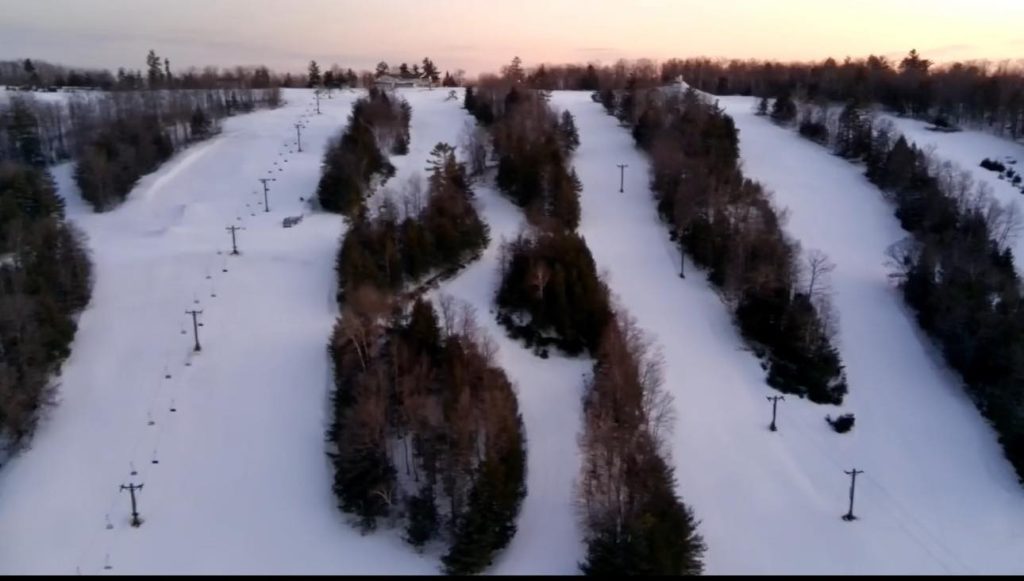
For seven winters, Norway Mountain sat in silence.
The chairlifts hung motionless above drifts of pine-needled snow. Inside the abandoned lodge, chairs were stacked neatly at empty tables. The last coffee cups were still on the counter.
When Justin Hoppe first walked through the quiet building, it felt as if the mountain had been frozen mid-breath, he recalls.
“It (looked) like the day they left it,” he says. “The plates were still in the restaurant, the chairs were still here. It was just a lot of cleaning.”
Founded in the early 1970s, Norway Mountain had been a longtime fixture with local skiers and others before its lengthy dormancy.
Hoppe, a longtime skier and Grand Rapids native, had dreamed of owning a ski resort. He didn’t necessarily map out a plan to own a ski hill in the western U.P., near the Wisconsin border. He stumbled upon the opportunity.
“I heard it mentioned kind of jokingly on a podcast,” says Hoppe, a former landscaper. “(My wife and I) came up, drove by, and said, ‘This would be kind of cool — we could make it work.’ My wife, Julie, actually made the first call to the realtor.”
A lighthearted idea turned into a year-long negotiation.
Hoppe toured the resort in April 2022, joining a small field of interested buyers. He lost out to another bidder before returning months later to find the property unchanged.
“We reached out again and learned that the deal had fallen through,” he recalls. “From there it was six more months of back-and-forth before we finally closed.”
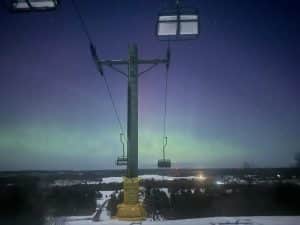
Once he got the keys – in September 2023 – the reality of the task ahead was clear.
“We had to do power upgrades to everything here,” Hoppe says. “They wouldn’t turn the power on until we upgraded the entire system. That was almost a year-long project.”
During that period, one longtime employee — someone who knew every switch, every snow gun, every chair – helped him bring the mountain alive.
“There’s no way we could’ve done it without him,” Hoppe said gratefully.
New beginning
With the purchase and their renovation efforts, the Hoppes aim to restore Norway Mountain’s reputation as a top family-friendly destination in the Midwest.
In Dickinson County, the excitement about the mountain’s reopening was tempered by disbelief.
“At first, people were cautious,” Hoppe admits. “For seven years they’d been told it was reopening and it never did. But once they saw the improvements, everybody jumped on board.”
By the time lifts began to spin last December, the reopening felt less like a business launch and more like a homecoming.
Families who had taught their children to ski there returned with grandchildren in tow. Retired employees came back to see the hill alive again. “We had people coming in saying, ‘I used to work here in high school,’ or, ‘My kids learned here — I can’t believe it’s open again,’” Hoppe says. “That’s the stuff that makes it worth it.”
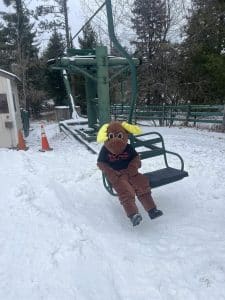
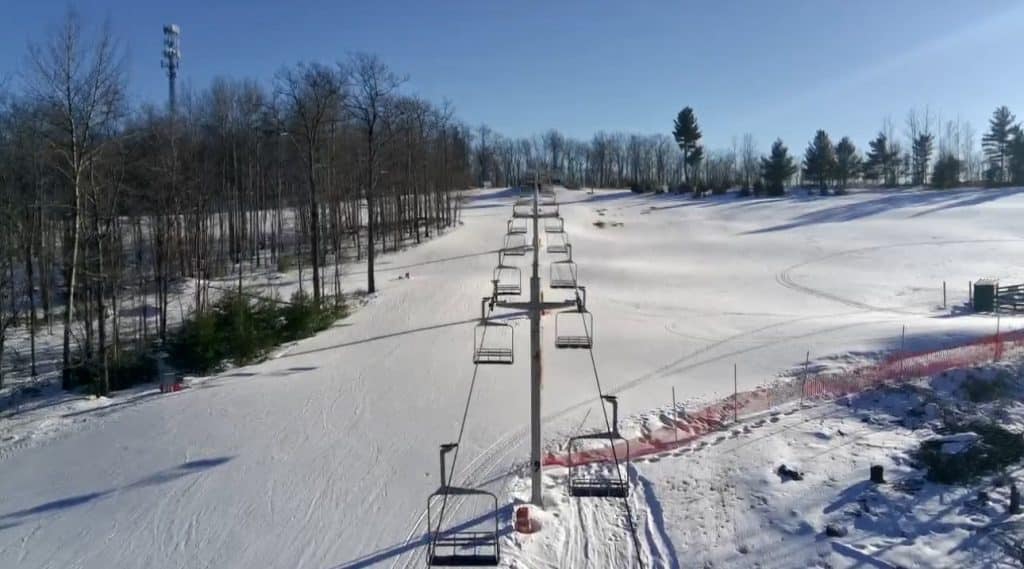
Today, the hill runs on a combination of classic reliability and newer infrastructure: three chairlifts total (a triple and two doubles), plus three handle tows serving the slopes.
Inside the restored lodge, the décor tells the story of two eras meeting in the middle: original tables polished and reused, fresh paint over old trim, light seeping through newly cleaned windows.
Outside, the resort’s two Sneller chairlifts, built in the early 1970s and engineered to last, have whirred back to life. Though only three Sneller lifts still operate worldwide, their longevity is a testament to a rugged design that has outlived many of their contemporaries.
“The third one’s in Pennsylvania,” Hoppe says. “We talk to them all the time because parts are impossible to find.”
Economic impact
Having another ski hill operating is a tremendous asset to Dickinson County, giving visiting skiers a choice in the area, says Dave Kasten, who is executive director of the Tourism Association of the Dickinson County Area.
“Both Pine Mountain and Norway Mountain are very family oriented and extremely efficient in their grooming and other operations,” he says. “Both hills offer additional events and activities during the skiing off-season, too.”
Norway Mountain’s reopening last winter added even more excitement to the U.P.’s alpine ski scene. Several ski areas were in the midst of major expansions and renovations, including. Mont Ripley, Marquette Mountain, Pine Mountain Resort and Mount Bohemia. The U.P. is home to about 20 ski areas.
Kasten says it’s difficult to measure Norway Mountain’s economic impact at this point because the resort only re-opened a year ago.
“But I believe that (impact) will change this year, and as the word gets out, we will see more room nights at our local hotels from the skiing enthusiasts,” he says. “Two facilities certainly broadens Dickinson County’s outdoor-recreation identity.”
The first winter
That first full winter of operation – 2024–25 – began quietly.
“December was pretty slow — it was also slow for snow,” Hoppe says. “If people can still golf, they don’t think about skiing.”
Most out-of-town visitors came from Green Bay, Wisconsin, and the Fox Valley, and when there was no snow at home, they often assumed there was none in the U.P.
“It’s hard to get people to think about the fact that we make our own snow,” he said.
But by February, crowds grew.
“We saw a big influx of people visiting us,” he recalls. “We went into April and actually skied May 2. We found a big stash of snow on the far east side and pushed it out.”
Night-skiing lights now glow, and tubing, new this year, is attracting families looking for something more approachable.
“We’re starting small,” Hoppe says. “If it goes well, we’ll expand next year.”
The ski industry
From his vantage point as executive director of the Michigan Snowsports Industries Association, Mike Panich sees Norway Mountain’s comeback as both symbolic and strategic.
“Every hill that comes back is a win for the community,” he says. “But it’s expensive — snowmaking alone is one of the biggest costs. Energy, insurance, labor — it all adds up before you even sell a lift ticket.”
Michigan ranks second only to New York in the number of ski areas, and most in the Great Lakes State are family run, he says.
“(These ski areas) don’t have deep pockets, but they have deep roots,” he notes. “These places teach generations to ski. When one closes, you don’t just lose a business — you lose a gathering place.”
Modern snowmaking has become the industry’s lifeline.
“Snowmaking today is far more efficient than twenty years ago,” Panich explains. “You can make snow at warmer temperatures and with less energy, which is crucial as winters become more unpredictable.”
Hoppe agrees, saying, “We don’t rely on natural snow. If we get good cold temps, we can have the hill open 100 percent in about a month. Natural snow is great, but it melts five times faster than man-made snow.”
Man-made snow builds a deeper, more substantial base, creating a high-quality surface that can withstand heavier use and maintaining consistent conditions for Norway’s skiers and snowboarders.
Panich ties Norway Mountain’s story to Michigan’s broader tourism economy.
“Winter recreation isn’t a novelty here — it’s a necessity,” he said. “When resorts like Norway Mountain reopen, they keep money local, extend employment through the off-season, and give families a reason to stay active close to home.”
According to an economic impact analysis drawing on Michigan Economic Development Corporation figures and shared by the Upper Peninsula Travel & Recreation Association, tourism in Michigan’s Upper Peninsula generates about $1.6 billion annually and supports approximately 11 percent of jobs across the region — nearly double the statewide average.
This regional share reflects the significant role tourism plays in local economies. Winter visitors spend close to $400 per trip on average, providing an economic lifeline to small towns like Norway and Iron Mountain during the quietest months of the year.
“Every reopened hill strengthens that ecosystem,” Panich says.
Beyond the numbers
For Hoppe, the impact goes beyond numbers.
“When you have something like this open, it gives people something to do,” he says. “It gives kids a place to go instead of sitting at home. That’s huge for a community.”
Looking ahead, Hoppe hopes to turn Norway Mountain into a four-season destination.
The mountain has hosted outdoor expos and last summer held events like the Midwest Comedy Tour and a 3D archery shoot. He’s booking weddings and hopes to add concerts in the summer.
“The lodge sits on top of the hill — the view’s incredible. You could put a stage up there; it’s like a natural amphitheater,” he says.
Hoppe and his family have now made the Upper Peninsula their permanent home.
In a 2024 appearance on The Storm Skiing Podcast, Hoppe reflected on what drives him through the grind of rebuilding a mountain from the ground up.
“You can’t fake the passion,” he told host Stuart Winchester. “You either want to do this or you don’t. It’s a grind — but it’s worth every second when you see kids out there smiling again.”
As the lights glow once more across Norway Mountain’s slopes, those smiles have become the truest measure of success. Its 500 feet of vertical drop and 186 skiable acres haven’t changed — but what’s new is the sense of possibility.
After seven silent winters, the mountain isn’t just open. It’s alive again.
Related Articles

Young entrepreneur launches U.P.-inspired skate and streetwear
The company creates clothing and skate deck signs that reflect Aidryk’s style and creativity.
New restaurants in Houghton and Hancock boost local food scenes
New restaurants replace eateries that have closed in recent months.

Michigan Good Food Fund receives $3 million USDA grant to expand healthy food access
The Michigan Good Food Fund is expanding its efforts to bring fresh, affordable food to underserved communities.