
Food as Medicine: Prescription for a healthier U.P.
Backed by Superior Health Foundation, a powerful Upper Peninsula coalition has launched a “Food as Medicine” program to fight regional food insecurity and directly improve community health through fresh produce prescriptions.
Food is medicine. Fresh fruits and vegetables help keep individuals healthy and strong, yet one in seven people in the Upper Peninsula cannot afford nutritious food.
This regional crisis reflects a staggering statewide problem. According to Feeding America, approximately 1.5 million Michiganders face food insecurity—including 400,000 children. The nonprofit notes that hunger is fueled by overlapping systemic barriers, including poverty, chronic health conditions, systemic racial discrimination, and a lack of affordable housing or healthy food access.
These challenges hit particularly hard in regional food systems. A community survey by the Western U.P. Food Systems Collaborative revealed that 95 percent of respondents worry about accessing fresh food, and nearly 39 percent find it completely unaffordable.
Change, however, is underway. Led by the Upper Peninsula Commission for Area Progress (UPCAP), a powerful coalition of more than two dozen regional agencies and organizations is actively working to dismantle these barriers and bring healthy food to every table in the U.P.
UPCAP has received support, including a two-year $682,776 grant, from the Marquette-based Superior Health Foundation to develop a Food as Medicine program.

“Food insecurity remains a significant challenge in the Upper Peninsula, particularly for low-income households, older adults and individuals with chronic health conditions,” says Tammy Rosa, UPCAP’s nutrition and food access program manager. “The Upper Peninsula Food as Medicine program was developed to help address this need by increasing access to nutritious foods and supporting healthier lifestyles.”
In addition to promoting individual health, the program helps strengthen the regional food system through investments in infrastructure that increase local producer capacity, improve access to fresh produce and contribute to healthier communities, Rosa says.
Food as Medicine
The Food as Medicine program is based on a model that prescribes healthy food for individuals who are at risk for or diagnosed with a chronic health condition like diabetes or heart disease and face economic barriers to food access.
Through the program, medical providers can refer eligible patients to receive $15 weekly vouchers for fresh produce, redeemable at 28 farmers’ markets and farm stands across the U.P.
“When UPCAP brought us this proposal, the numbers were hard to ignore: one in seven residents across the Upper Peninsula are food insecure, and that insecurity is directly tied to the chronic health conditions the Superior Health Foundation works to prevent,” says Megan Murphy, the foundation’s CEO. “The Food as Medicine model appealed to us because it treats fresh produce as a health intervention, built on a prescription for health approach that already had early evidence of working in the U.P.”
The program also appealed to the foundation because it was designed to outlast its funding, with formal healthcare partnerships, infrastructure investment in farm cold storage, and a coalition of organizations committed to sustaining it.
“Our hope was that this grant would also help the region recognize food access as a core part of preventive healthcare,” Murphy says.
Concept is Spreading
The concept of food as medicine is gaining traction across Michigan.
In addition to UPCAP’s program, other agencies—from the Michigan Department of Health and Human Services to regional organizations and local hospitals— offer a variety of programs that focus on healthy food.
The Michigan Department of Health and Human Services sponsors a program called In Lieu of Services (ILOS) to encourage Michigan’s Medicaid health plans to provide support for members’ health-related nutrition needs. ILOS are services the state deems to be medically appropriate and cost-effective substitutes for other Medicaid-covered services.
This initiative is intended to build on and complement existing food and nutrition programs. ILOS’s goal is to improve health and reduce the future need for medical services by reducing food insecurity and ensuring that Medicaid enrollees have access to nutritious foods.
In Alger County, the Commission on Aging started its own fresh produce program for seniors in May.
“There was a big need to begin our own fresh produce program,” says Kris Lindquist, executive director of the commission.
Through the agency’s Our Fresh Produce program, Alger County residents who are 60 or older and meet financial eligibility guidelines were eligible to receive $50 paper coupons for farm-fresh produce.
“Most seniors cannot or do not want to deal with electronic cards, same with our farmers,” Lindquist explains.
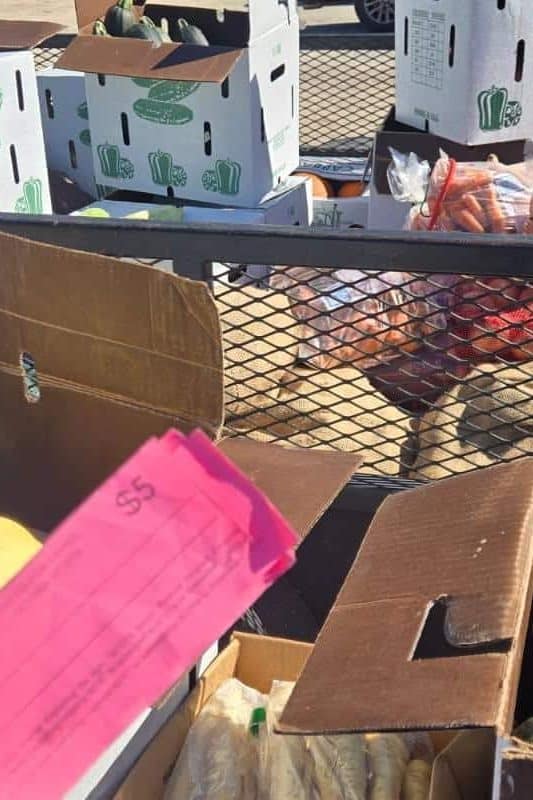
The Commission on Aging distributed 500 coupons, which could be used until October 31. The program was funded by a two-year grant from the Superior Health Foundation.
At Schoolcraft Memorial Hospital in Manistique, two programs address food insecurity.
“Food is one of the most fundamental social determinants of health, and consistent access to nutritious food can directly affect a person’s physical health, mental well-being, ability to manage chronic conditions and overall quality of life,” says Jessica Baker, patient navigator at the hospital.
“In our rural community, food insecurity continues to be one of the most significant sources of stress for individuals and families, particularly when household budgets are already stretched by the rising costs of housing, utilities, transportation and medications,” she adds.
During the government shutdown in 2025, when food stamp benefits were suspended, the hospital provided free breakfast and lunch for food stamp-eligible families.
That program ended when government benefits were restored, but the hospital’s response has evolved beyond addressing an immediate need to help patients build practical, sustainable strategies for food security, she notes.
“We connect individuals with available food resources while also recognizing that food security involves more than simply having food available. Understanding how to budget for groceries, make nutritious choices within a limited budget, properly store food, reduce waste and make the most of available resources is an important part of that equation,” Baker says.
Last spring, the hospital also offered a six-week community cooking program to help participants build confidence in the kitchen, learn new skills and explore foods and preparation methods they may not typically try at home. The classes were open to all adults and were part of a state-wide collaboration with the Michigan Health & Hospital Association.
The response was very positive,” says Sara Giles, marketing director at the hospital.
“Participants appreciated the educational component, but we also found that the classes provided an important opportunity for social connection. People were able to cook, learn, share a meal and meet others in a relaxed environment,” she says. “Many participants were surprised by the foods they enjoyed and became more willing to experiment with new ingredients and healthier options.”
Programs like this can support health in several ways, Giles points out.
“Building practical cooking skills can help people feel more confident preparing nutritious meals at home, while the social component creates an opportunity for connection and engagement,” she says. “Sharing food and learning together can make healthy eating feel more approachable and enjoyable rather than simply educational.”
Because the cooking classes were so well-received, the hospital plans to continue offering them twice a year. A local chef will lead the free classes.
“They will focus on practical skills people can use to become more creative and confident home cooks,” Giles says. “We anticipate offering the classes in a drop-in format, so participants can attend individual sessions without having to commit to an entire series.” The hospital will be announcing dates and details about the fall class shortly.
The BHK Child Development Center, which runs preschool programs for children in Houghton, Baraga and Keweenaw counties, recently received a $98,000 grant from the private nonprofit Head Start. The grant is designed to improve BHK’s fresh food and nutritional wellness programs. BHK plans to overhaul all its kitchens, provide whole fruits and vegetables, and support mothers who are breastfeeding their children at its locations.
“With these additional dollars, we’ll be able to upgrade so we can really focus on those whole foods, those fresh vegetables and fresh fruits,” says BHK Health Services Director Katie Waara.
“In addition to upgrading our cooking equipment and food service equipment, we’re also going to focus on implementing breastfeeding support resources,” she says. The organization plans to create dedicated lactation spaces. “We are putting a big focus on families feeling welcome when they have a breastfeeding child.”
BHK also aims to put in a nutrition-based curriculum for children and their families.
“Nutritious meals and positive food experiences are essential to healthy growth and development,” says Cheryl Mills, BHK executive director. “We are excited to put this investment to work for the children and families we serve.”
Clearly, food as medicine is becoming mainstream in Michigan.
“The Food as Medicine movement in Michigan is growing rapidly, and deservedly so,” says Public Sector Consultants, a woman-owned independent, nonpartisan public policy consulting firm. “Food as medicine programs show promise in increasing engagement with preventive health services.”
UPCAP’s Tammy Rosa sees it this way: “When you live in a region as rich in natural resources as the Upper Peninsula, it’s easy to assume everyone has access to fresh healthy food. Unfortunately, that isn’t always the case.”
Food insecurity and chronic health conditions are real challenges facing many of residents, and access to affordable, nutritious food can make a significant difference in their lives, she says.
“The UP Food as Medicine program is working to break down barriers by increasing access to fresh fruits and vegetables, providing nutrition education and supporting local producers,” she says. “Our hope is that this program not only helps families put healthier food on their tables today, but the investment in the health and well-being of residents contributes to stronger, more resilient communities in the future.”
Related Articles
Rx Kids expansion to 60 Michigan communities is balancing family budgets and birthing healthier babies
The Michigan program is the largest unconditional cash transfer program for expectant parents in the country.
From hospital to homelessness: Marquette project seeks to establish recuperative care for the unhoused
People experiencing homelessness are often discharged to shelters or the streets with no way to receive crucial recuperative care. A project led by Room at the Inn in Marquette aims to change that.
Nearly $300K in Seed Awards bolster Michigan’s local food and farming
Nearly $300,000 in Seed Awards from the Michigan Good Food Fund will support 18 food and farm businesses across Michigan, helping small, locally rooted operations grow and improve food access.