Partner Partner Content From Pipeline to Porch: The important journey of propane in the U.P.
Enbridge’s Rapid River Station near Escanaba serves as a critical node in the energy architecture of the Great Lakes.
Nearly every day, even through the biting, snow-blind winters of the Upper Peninsula, a steady procession of tanker trucks cycles through an unassuming industrial site along U.S. Route 41.
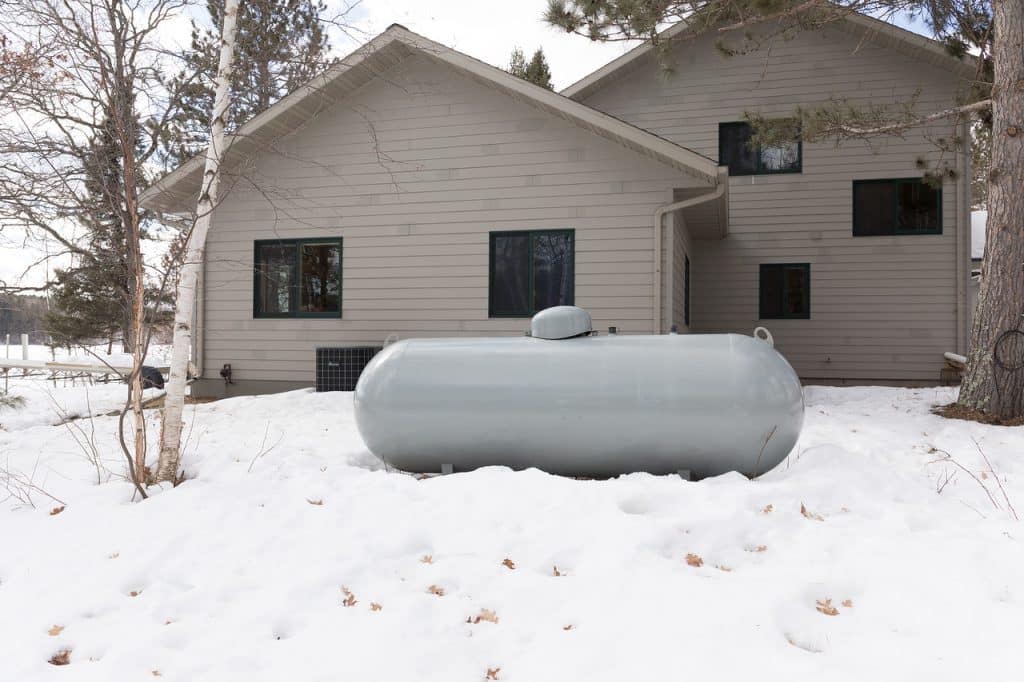
Located just outside Escanaba, the facility sits quietly against the rugged landscape. Most drivers pass it without a second thought, unaware that this compact complex of silver pipes and pressurized tanks holds enough stored energy to keep more than half of the peninsula warm during the region’s most brutal months.
This is Enbridge’s Rapid River Station, a facility that serves as a critical node in the energy architecture of the Great Lakes. While it may look like a standard utility hub, Rapid River is the primary point where the “abstract” energy traveling through a transcontinental pipeline becomes the “tangible” heat keeping families safe in counties across the U.P.
A critical intersection of energy
The station is far more than a simple storage depot; it is a sophisticated processing hub. It is here that propane is extracted and refined from natural gas liquids (NGLs) traveling through Line 5. Once separated, the propane is stored in high-pressure on-site tanks, available for immediate distribution by the trucks that serve as the “last mile” of the regional energy grid.
“Rapid River feeds the bulk of the U.P. ‘s propane needs,” says Technical Supervisor Brian VanOss. As the only depropanization plant in the Upper Peninsula, the site acts as a vital midpoint between the pipeline’s bookends in Superior, Wisconsin, and Sarnia, Ontario, Canada.
“This is the main source of heat for people in the U.P.,” VanOss adds. Without this specific stop on the map, the logistics of heating the region would shift from a streamlined pipeline process to a massive, expensive, and less reliable trucking or rail operation.
The mechanics of safety and flow
While the facility’s most visible role is providing propane, it also serves a dual purpose as a pump station. This infrastructure helps maintain the hydraulic pressure and flow of crude oil and NGLs as they journey through the 645-mile-long Line 5.
Safety at the Rapid River facility is treated as a foundational mandate rather than a checklist. Responsibility is shared between Enbridge, which owns the pipeline and pump station, and Plains All American, which operates the depropanizer. Because the site handles both high-pressure liquids and volatile propane, the monitoring systems are layered with redundancies focusing on leak detection and vapor monitoring.
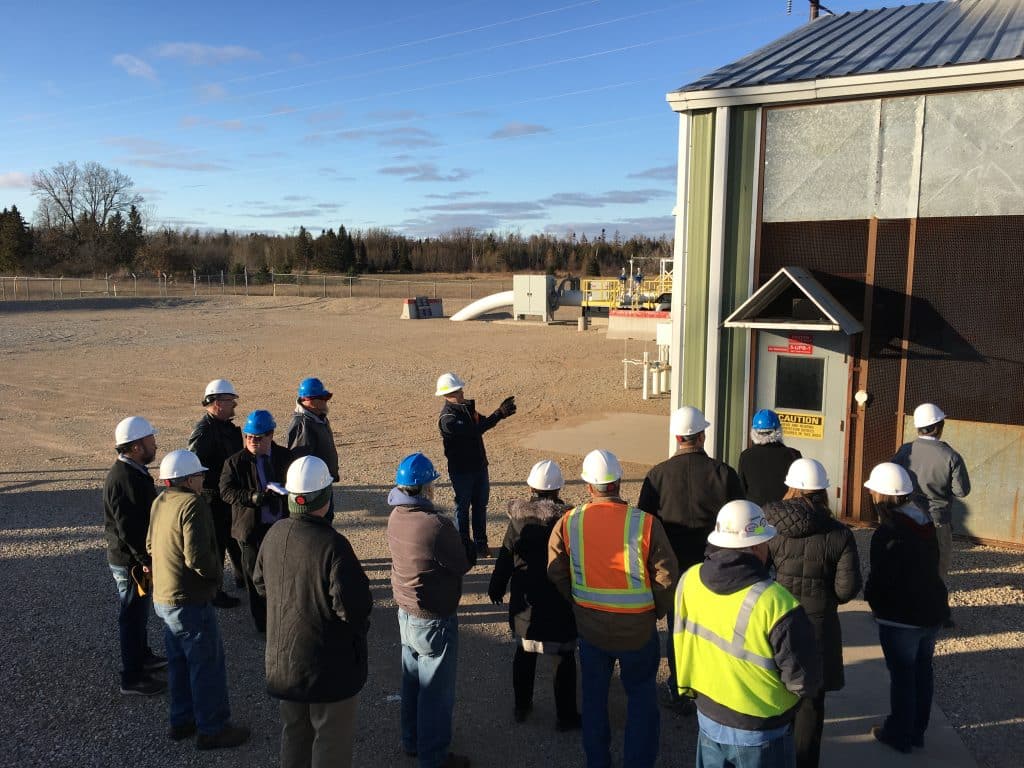
The daily lives of the technicians on-site revolve around the meticulous maintenance of valves, motors, and pumps. Beyond human oversight, the facility is equipped with automated emergency shutdown systems. These “fail-safe” triggers act independently of human intervention, instantly halting operations if internal pressures or temperatures fluctuate beyond strict safety parameters.
Modernizing for the future: The Tunnel Project
To ensure the long-term security of this energy lifeline, Enbridge is advancing the Great Lakes Tunnel Project. This multi-billion-dollar initiative aims to replace the existing crossing at the Straits of Mackinac—where the pipeline currently rests on the lakebed — by encasing a new segment of Line 5 in a massive concrete tunnel bored nearly 100 feet beneath the rock of the lakebed.
The project is entering a decisive phase. Following years of rigorous environmental review, the U.S. Army Corps of Engineers released its final Environmental Impact Statement this month. This federal milestone has moved the project out of “regulatory limbo,” with a final Record of Decision expected this spring.
A pipeline born from the waves
The push for the tunnel is the latest chapter in a story that began in 1953. Before Line 5, fuels were transported via barge across the volatile, ice-choked waters of the Great Lakes.
“In the 1950s, the decision was made that a pipeline was a much safer and more efficient way to transport that volume,” says VanOss. “The thought was: let’s get that oil off the water.” By placing the line in a deep-rock tunnel, Enbridge officials say they will virtually eliminate the risk of anchor strikes and environmental releases, making the crossing more secure than ever before.
Michigan’s propane profile: By the Numbers
The sheer scale of Michigan’s reliance on this fuel is reflected in its national standing. In the U.P., propane isn’t just about comfort; it powers the stoves, water heaters, and clothes dryers of 320,000 households.
According to 2024–2026 data from the Michigan Public Service Commission:
- No. 1: Michigan’s national rank in residential propane sales.
- 65 Percent: The amount of all propane used in the U.P. delivered via Line 5.
- 55 Percent: The portion of Michigan’s statewide propane needs met by this single pipeline.
The human element
Inside the Rapid River complex, the talk is of pressures and flow rates. But for the local distributors who arrive daily, those technical specs translate into a simpler mission: keeping the lights on across the U.P.
David Naser, a fourth-generation owner of Naser Propane, is a fixture at the facility. He fills his tanker trucks every day—and often on weekends during the peak of winter—to serve homes and businesses in Delta, Marquette, Menominee, and Dickinson counties.
“People have no idea what this place is,” Naser says of the Rapid River facility. “This is where the propane comes from that heats people’s homes. They don’t seem to care where it comes from as long as they know it will get delivered when they call.”
Naser remains impressed with the sheer scale of the operation and its role in the community. “It’s completely irreplaceable,” he says of Line 5. “There’s not enough tankers or crew members to replace it. Without Line 5, the sheer volume of tankers needed would cripple the roads and the Mackinac Bridge.”
In the Upper Peninsula, energy isn’t an abstract concept; it’s a daily necessity delivered one truckload at a time. The Rapid River facility may be a collection of tanks and valves along a highway, but for 320,000 households, it remains the heartbeat of the home. As long as the winters remain long and the winds blow cold, this small industrial node will be the most important stop on the map.
Related Articles

Keeping an eye on ships crossing the Straits of Mackinac
The Enbridge Straits Maritime Operations Center monitors ships passing through the Straits to make sure anchors are properly secured.
Marine Trades Institute plans special fundraiser for Student Enrichment Fund
The Marine Trades Institute in Cedarville hopes to raise $30,000 for its Student Enrichment Fund, which supports the purchase of essential equipment, field trips and professional development opportunities.
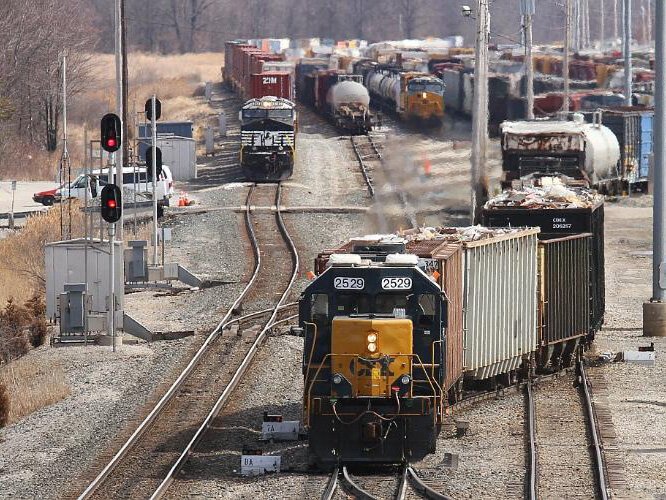
Railroad program flourishes where there are no rails
A three-year pilot program to teach rail transportation education and research at Michigan Technological University is still rolling along two decades later. The nationally recognized program has attracted more than 1,000 students and continues to grow.