
Heritage Trails to break ground on ‘missing middle’ homes in Marquette Township
The project aims to deliver 48 attainable homes over the next two years, with the first phase of 24 single-family homes slated to begin construction this month.
Editor’s note: This story is made possible thanks to support from Lake Superior Community Partnership.
Heritage Trails, a new “missing middle” housing development, is set to break ground in Marquette Township this spring.
Located at 170 County Road 492, the project aims to deliver 48 attainable homes — housing options designed for middle-income households — over the next two years. The first phase of 24 single-family homes is slated to begin construction this month.
Seventeen units will be set aside for applicants below 120 percent of the Area Median Income (AMI), with pricing offset by a Tax Increment Financing (TIF) plan recently approved by the Marquette County Brownfield Authority. That threshold is typically used to define moderate-income or workforce housing. The remaining units will be priced competitively, with most offered at or below the cost of construction.
A partnership between Wisconsin-based Wildflower Development and Renovare Development, Heritage Trails is part of an ongoing push to expand workforce housing options throughout Marquette County.
“This project came about when the township reached out to us about a parcel they owned when they were watching some of the other projects that we were working on,” said Shannon Morgan, who is president of Renovare Development, a Detroit-based real estate company that aims to create affordable housing and community-centric commercial spaces.
The township determined that the vacant 5.3-acre parcel, located between Goodwill and Mount Mfg along County Road 492, would be a good fit for new workforce housing. To make it work, the township needed to secure a subsidy for the attainable units, as well as a local partner to take point on construction.
“Wildflower has already been doing some work in the U.P.,” Morgan said. “(The company) reached out to us. They were really interested in exploring this model and potentially doing this model in other communities in the U.P., and that’s when we determined that it would be a great opportunity to partner here and build some strength with their local resources.”
According to Mitch Nordahl, owner of Wildflower Development, “They needed an operator that understood production volume housing, something that, to my knowledge, there’s not another operator in Marquette County doing anything similar.”
Nordahl said his company will be the builder, majority stakeholder, and capital partner on Heritage Trails. Renovare will work to realize the units set aside as workforce housing, and “secure the grant funding, they will be doing back end administration of construction draws, and the closings of the affordable attainable units that we have.”
Of the 17 units priced under 120 percent of AMI, 13 are planned for completion in 2026, with the remaining four going up in 2027.
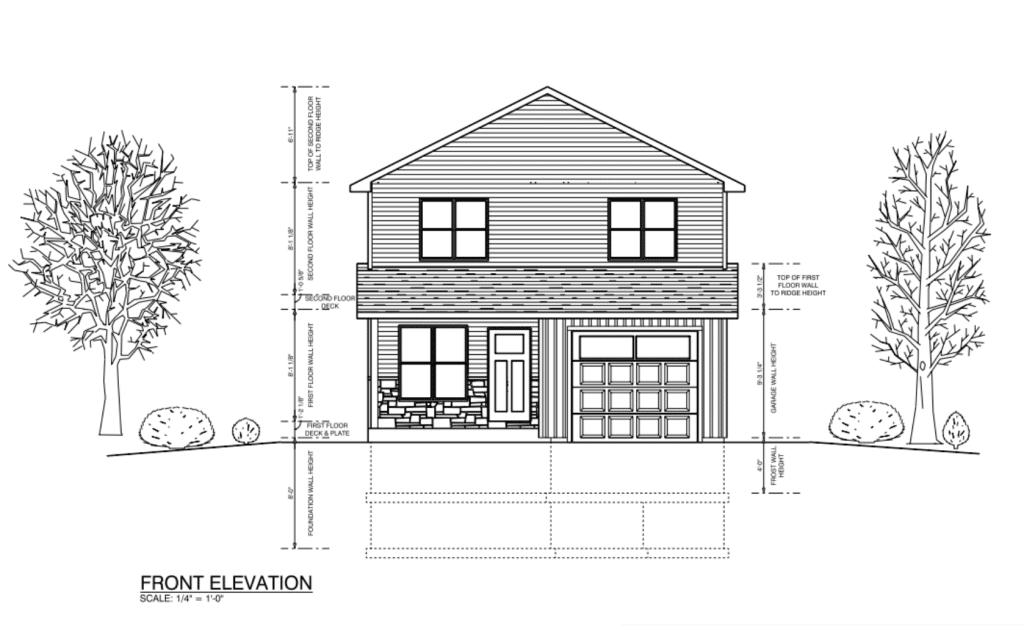
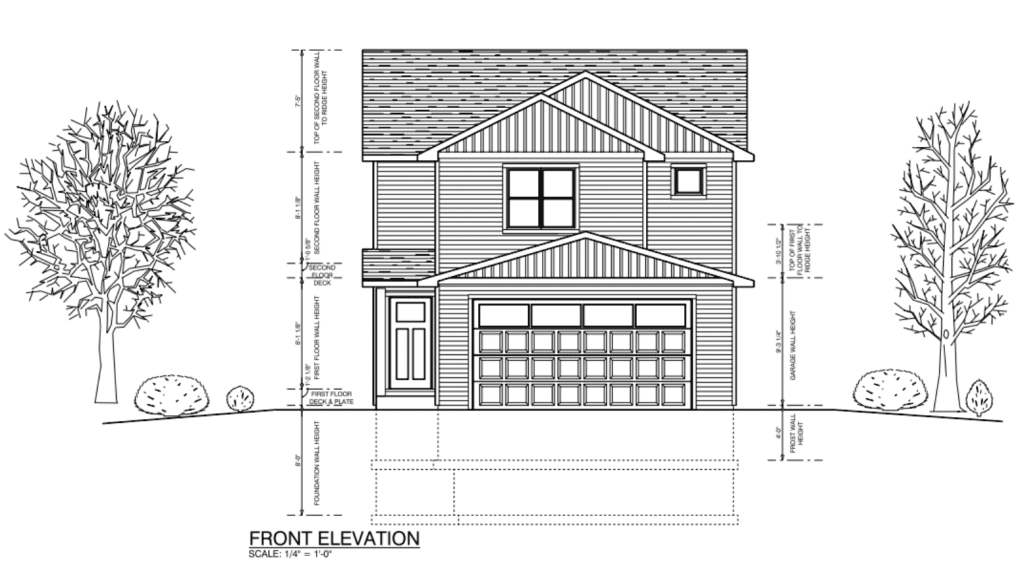
All 48 units will have some level of customization. Buyers of market-rate units will be able to choose from a variety of floor plans and exteriors, with the average square footage expected to be around 1,300 to 1,600 square feet, with a maximum of 2,000 square feet. Attainable options will have flexibility, but with a more limited selection.
The development will be split between 24 single-family homes and 24 duplex and townhouse units. Two-car garages will be standard.
Pricing for subsidized units “will be starting in the low two hundreds,” Morgan said. “We will have access to down payment assistance for folks who qualify between the 60 percent to a 120 percent Area Median Income. Typically, we will be moving forward fairly quickly, and those 17 units are going to be sold considerably less than the price of construction. Those do require a five-year deed restriction through the Michigan State Housing Development Authority. And typically, if you resell at any point in five years, it has to be resold to someone in that income level.”
Marquette is currently in a period of low-volume, low-vacancy, and limited attainable development that has made projects like Heritage Trails a lifeline for young professionals looking to put down roots.
According to documentation from the Central Upper Peninsula Housing Partnership, the project’s Brownfield Plan explains that, locally, “Housing vacancy is not a large issue in these markets, as both the renter and owner vacancy rates are low, and there is not a large amount of seasonal or ‘other’ vacancy either. Changes between 2016 and 2021 may indicate higher housing costs in the future, since the number of market vacancies has decreased significantly during that time. This seems to have increased housing costs and home values for current residents, especially renters.”
The project has been approved for a 10-year TIF plan reimbursing an estimated $1,427,211 in eligible developer expenses. Those include site preparation, infrastructure improvements, administrative expenses, and other costs associated with developing the property.
Without the county’s assistance, said Marquette County Brownfield Authority Director Jackie Solomon, most workforce housing proposals “don’t pencil. The development doesn’t make sense from a financial perspective. So these developers aren’t going to build houses here, and they’re not going to build houses for a loss. So we can utilize [tax increment financing and related programs] to make them attainable.”
Heritage Trails and a recent wave of other attainable developments have leveraged city, county, and state government resources to address the state’s housing bottleneck directly: by building homes targeted at the majority of buyers.
“If we want to take on housing,” Morgan said, “we have to look at the entire puzzle. There’s not always a one-size-fits-all solution, but ultimately, we’ve spent many, many years not building the right product for the demographics that we’re trying to serve.”
When crews break ground on the site this spring, it will be another significant step toward a community that people not only want to live in, but can.
For more information about Heritage Trails, and to register to join the waitlist, visit: heritagetrailsmarquette.com.