Crowdfunding helps public projects in the U.P. and rural Michigan
A crowdfunding platform for civic-minded projects has helped dozens of communities across Michigan.

Looking to spruce up barren walls in downtown Rogers City and bring more art into the community, advocates turned to the state’s crowdfunding tool.
The folks in Hancock – in the Upper Peninsula – wanted to create a mountain bike skill park and trailhead near a popular recreation spot. They turned to that same tool.
And so have countless other communities across Michigan.
The crowdfunding tool is Patronicity, launched in Detroit in 2013. Founders Chris Blauvelt and Ebrahim Varachia realized that crowdfunding could serve as a catalyst for economic and community development.
Although similar to GoFundMe, a popular online crowdfunding tool, Patronicity differs because it includes a matching grant component. Participating communities are paired with a coach who helps launch their fundraising campaign, helps set a budget and offers training on using Patronicity’s online platform.
Almost since its inception, the Michigan Economic Development Corporation has used Patronicity to help communities fund the creation of public spaces, providing matching dollars. There are typically 30 to 40 projects underway through the Public Spaces Community Places initiative during each funding cycle.
To date, the success rate of Patronicity projects is well above 100 percent. Many communities end up exceeding their funding goals. Successful campaigns range from adding community space to the Ironwood Carnegie Library to creating a new sports complex in Alpena to a pocket park in Byron.
“Campaigns are raising more than their goals,” said Mahala Clayton, who is the Michigan director for Patronicity. She manages the state’s Public Spaces Community Places program on behalf of Patronicity. “I’ve gotten to know so many Michigan cities and have fallen in love with them. I really love my job. It’s a lifeline for a lot of communities, enabling them to build a space that’s better loved and better used into the future.”
About the program
Nonprofits, municipalities, and L3Cs (for-profit companies that have a social mission as primary goal) are eligible to apply to partner with MEDC and Patronicity to raise funds for projects that benefit their communities. Projects run the gamut: community gardens, dog parks, pickleball courts, playgrounds and pavilions.
Involvement by Public Spaces Community Places program is normally the last big funding push for most community projects. “They’re typically raising the last $100,000 or less,” Clayton said.
Additional funds may be made available for projects that meet universal design and accessibility standards, meaning that anyone of any ability has full access.
Smaller projects with smaller budgets are sometimes fully funded throughPublic Spaces Community Places. Locally raised funds are matched by MEDC.
“If they don’t secure the goal, they don’t secure the match,” Clayton said.
To build momentum, a short timeline of 30 to 60 days is set for fundraising.
“There’s power in crowdfunding, but it’s a lot of work,” Clayton said. “It’s important to have someone who is absolutely passionate about what they’re doing. There are always going to be naysayers so it’s important to involve a team that can help spread awareness.”
To spread awareness of the program, Clayton presented an informational session during the annual Small Town and Rural Development Conference, sponsored by the Community Economic Development Association of Michigan (CEDAM), in June.
“We were looking to be certain that more rural communities and small towns we haven’t yet worked in know about our Public Spaces Community Places program and the Patronicity crowdfunding platform in general, so the CEDAM (conference) was an excellent opportunity for us to do just that,” Clayton said.
Rogers City
Art advocates in this Presque Isle County town initially turned to Patronicity to raise money to create and a Mural on Main Festival, bringing artists to beautify barren walls on downtown businesses.
In addition to paying artists, the Patronicity campaign created seed money for future festivals. The initial campaign exceeded the $50,000 goal – by about $10,000. MEDC matched the goal amount. Rogers City pursued a second Patronicity campaign for the 2025 festival, raising some $28,000.
Partnering with MEDC and Patronicity made sense because the Northeast Michigan community has no corporate donors and limited access to grants and other forms of funding, said Katy Carignan, an attorney, entrepreneur and arts advocate who served as the fundraising chair for the campaign.
“Crowdfunding gives an opportunity for a community like this to have another way of fundraising,” she said. “We raised a large amount of money for a tiny community.”
While most donations were under $500, the mural project brought the community together.
“Small donations add up and when a person donates, they have ownership,” she said.
The mural project involved local artists as well as national and international talent. A Murals 101 class was also hosted for high school students.
“The MEDC platform is idiot-proof.” she said. “It’s easy to make updates to keep donors engaged and it’s optimized for phones and computers.”
Grayling
Looking to create more space for area artists, art advocates in this Crawford County community turned to Patronicity as well. Their goal to raise $50,000 was surpassed by about $10,000.
With the matching funds and other monies, the community was able to renovate vacant buildings downtown for the AuSable Artisan Village.
“We had the original art gallery that opened in 2010, but we outgrew the space,” said Radel Rosin, who is executive director of AuSable Artisan Village.
The expansion provided room for a community theater and a pottery studio.
“We needed a solution for a community theatre and a pottery studio. We didn’t have the space in the original gallery,” he said. “We had no idea what kind of response we’d get with a crowdfunding campaign, but the platform itself helped with the push.”
The feedback from the community has been overwhelmingly positive.
“It’s turned into a community cultural hub – more of a destination,” he said. The space is being used for chamber events, local celebrations and as a rental facility for private functions. “It’s truly a space for the community.”
While the campaign has ended, communicating with the public about the Artisan Village continues to be a priority.
“Totally dive in and stay connected with your community,” he advised. “Continue to reach out to your crowdfunders through newsletters and other forms of communication. Our outreach has grown. Communication is key.”
Hancock
Like the other communities, Hancock exceeded its $50,000 goal to raise money to build a mountain bike skill park and trailhead near the Hancock Recreation Area and Maasto Hiihto Churning Rapids trail system. The Keweenaw Peninsula town exceeded the goal by nearly $10,000.
“It’s been a dream of Nate Laakonen who drove past that lot daily and now it’s being built,” said Ian Helman, who is a Hancock Trails Club board member. “It’s pretty exciting. It’s an asset for the tri-county area.”
He noted the recreational spot is already well used by residents of both Hancock and Houghton. The area includes more than 20 miles of biking trails, trails for hiking, running, cross country skiing and fat tire biking.
Helman said he was surprised how quickly the project gained community support and funding. “It’s a perfect fit for the trails club. We’re super happy that it all came together.”
Patronicity’s Clayton said the Public Spaces Community Places has gained a lot of attention in the Upper Peninsula. Other recent projects included expanding a children’s museum in Ironwood and a splash pad in Laurium.
She said small communities have an advantage in these endeavors because people are eager to share information and resources.
“In a small community, everyone’s got their eyes on what’s happening,” she said.
To learn more about Public Spaces Community Places campaigns through Patronicity, go to www.patronicity.com, where you can access a crowdfunding guide, learn about other completed projects, read about resources and inquire about starting a campaign.
Related Articles
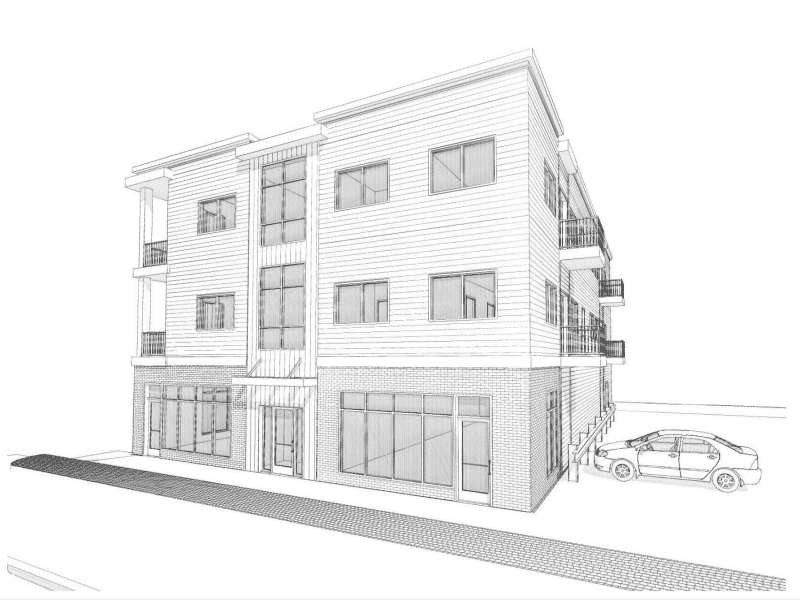
New mixed-use housing project coming to Marquette’s Washington Street
Plans call for a 16,150-square-foot building featuring two commercial suites, underground parking, and 11 residential units.
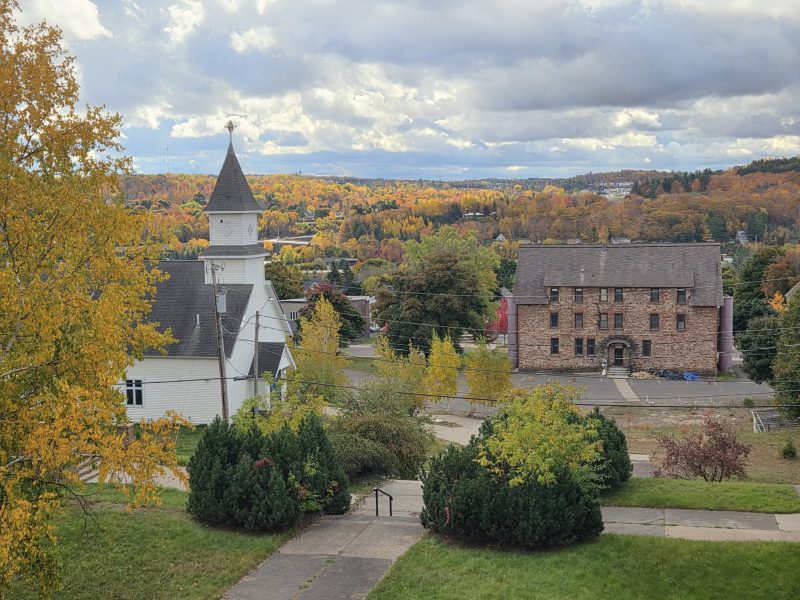
New Life in Old Halls: Transforming Finlandia University’s former buildings for a vibrant future
Most of the university’s buildings have been sold. Some are being renovated into apartments and commercial space. Others will become event venues and a community hub.
Rural Leadership Fellows boost development projects in the U.P.
The program aims to encourage students to pursue careers in the U.P.