Roommates with a Purpose: A first-year med student’s deep dive into dementia care
The Intergenerational Living Initiative serves as a ground-breaking model that combines medical education with immersive and community-based care.
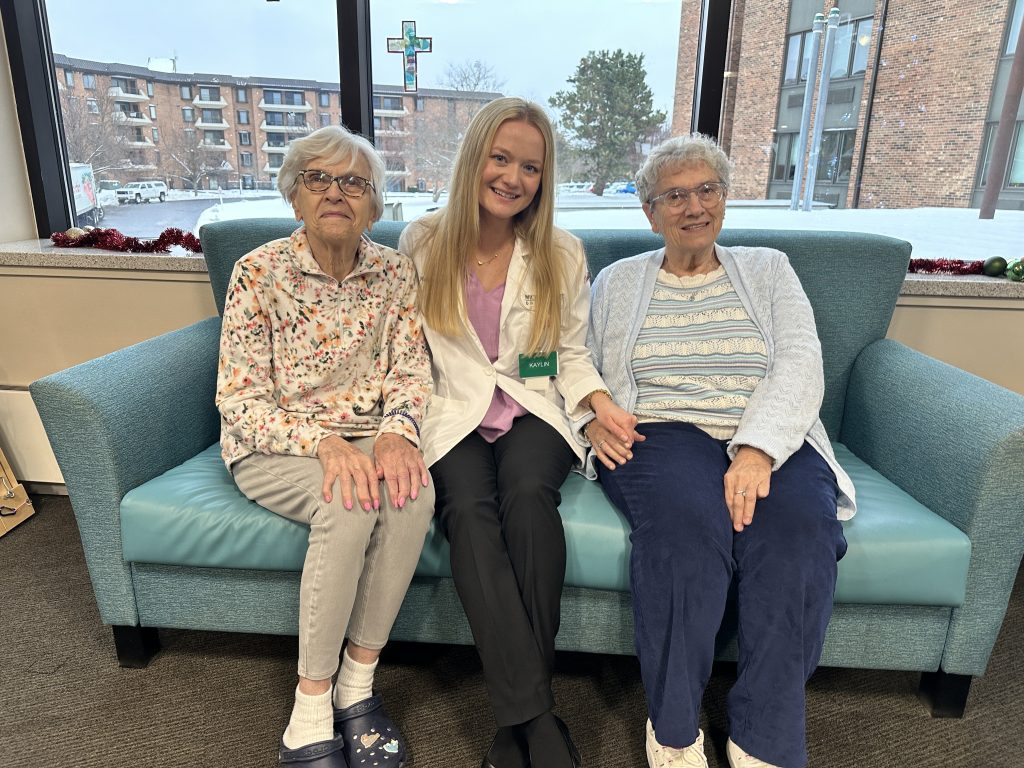
Kaylin Burton, a 2025 graduate of Lake Superior State University, plays a key role in a unique partnership between Michigan State University’s College of Human Medicine and the Dementia Institute at Holland Home in Grand Rapids.
The first-year medical student resides not in a campus dormitory or a student apartment but at the Holland Home’s Raybrook campus, a senior living facility.
Living in the facility on a day-in, day-out basis and interacting with dementia patients gives 23-year-old Burton an upclose look and hands-on experience in the care of older adults.
“A senior living community that creates a supportive and positive environment including dementia-specific training for all staff, not just direct care workers, helps to strengthen interaction and understanding,” she said.
Burton is the first medical student to take part in the Intergenerational Living Initiative, a ground-breaking model that combines medical education with immersive and community-based care. She lives among the 300 residents housed in the independent living area and the 40 residents in Holland Home’s dementia unit.
The initiative grew out of more than two years of research and collaborative development between the Dementia Institute and Michigan State University’s College of Human Medicine, said Curt Gritters, director of the Dementia Institute.
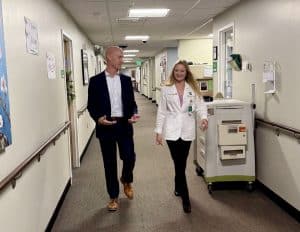
“Leaders from both organizations shared a common goal — to raise the standard of dementia care and medical education,” he said.
Being on-site is not only a novel approach for a medical student but an eye-opening one as well.
Burton helps with resident care while under supervision. Additionally, she frequently host activities for residents and joins them for coffee or social time. Her primary goal is to build relationships and engage with residents to provide the “intergenerational” social aspect which has been found to improve well being and keep spirits up.
Interacting directly with people living with dementia has shown Burton that care is more than managing medical symptoms.
“I noticed how structured daily activities give residents a sense of purpose and keep them engaged, creating a calmer, supportive environment,” she said. “Consistent routines, visual cues, and hand-under-hand guidance help residents navigate daily life, sometimes reducing anxiety and the need for comfort medications, while allowing them to maintain autonomy and feel more at ease.”
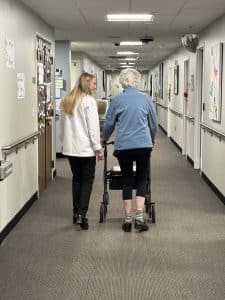
The Dementia Institute’s Gritters said residents at the home responded with enthusiasm to Burton right from the beginning. It was immediately clear the program was “something special,” he said.
“Residents lit up when she entered the room, and their interactions were filled with smiles, shared stories, and a sense of family taking shape almost immediately,” he said. “Their early response affirmed that this Initiative reflects exactly what we strive for: offering the best experience for our residents while preparing the next generation of dementia-capable physicians.”
Britton Olson, a professor of biology and pre-professional chair at Lake Superior State University, said Burton’s immediate success was no surprise, given her achievements in undergraduate school and her medical school training.
“Students like Kaylin gain a holistic understanding of patient needs, strengthening skills and cultivating compassion that will last throughout their careers by participating in the Intergenerational Living Initiative,” she said.
Burton, who moved into the center in August and will stay there through the next school year, said her observations have been positive. This hopeful outlook has inspired her and she plans to integrate elder care into her practice through internal medicine with a primary care focus.
She’s learned a lot in this immersive environment adding that education and community engagement can significantly improve quality of life in senior living settings.
“I was excited to learn how many individuals in independent living volunteer throughout the community, including in assisted-living and memory care units, which help create connection and give purpose to everyone.”
The program will welcome another medical student in the future, Gritters said.
“By having a medical student live full-time on campus and work with the dementia unit, it has brought consistent companionship, deeper relationships, and meaningful engagement into residents’ routines,” he said. “We’ve seen residents respond with more smiles, storytelling, and a stronger sense of connection—benefits that directly support emotional well-being and quality of life.”
Related Articles
LSSU launches accelerated master’s program to fast-track careers in fisheries and wildlife management
The program was developed in response to changes the university is seeing across the natural resources field.
LSSU earns ABET accredition for four engineering programs
This marks the first ABET accreditation for the robotics engineering program, with the other three programs completing re-accreditation.
Bay Mills Community College awarded $9 million gift
President Dr. Duane Bedell called the contribution “extraordinary” and “transformative.”