Three U.P. communities, three water projects
Houghton, Ironwood and Baraga benefit from grants from the Michigan Strategic Fund’s Community Development Block Grant.
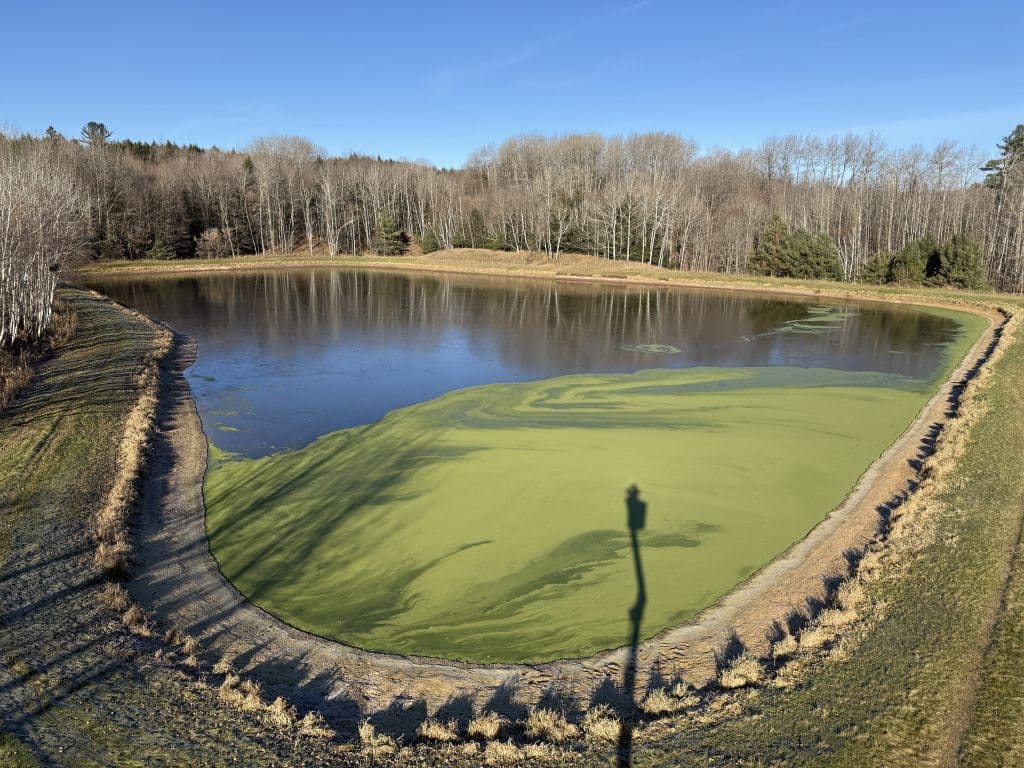
What if sludge has built up in your community’s wastewater treatment lagoon? Or your city’s aging water mains have corroded and broken, springing leaks over and over again.
That happens in a lot of rural, low-income communities in the U.P. The systems are old, and time has taken its toll. Many of these communities don’t have the funds to fix them.
But thanks to new grants from the Michigan Strategic Fund’s Community Development Block Grant for Water-related Infrastructure, three U.P. communities will be able to address those problems.
The city of Houghton, the city of Ironwood and the village of Baraga have received the grants. Houghton is getting $1.5 million to replace water mains and related infrastructure. Ironwood will get $672,540 to replace water mains, and Baraga will receive $1.36 million to rehabilitate their wastewater treatment lagoons.
Village of Baraga
Wastewater lagoons are a method of treatment that use natural biological processes like sunlight and wind to break down pollutants.
Baraga has six wastewater treatment lagoons. The lagoon system was constructed in 1970. It no longer meets current operational standards, which is why an upgrade is necessary.
Some issues were discovered at the wastewater treatment lagoons, including leakage in the existing lagoon liner and the discharge of inadequately treated wastewater. If not corrected, these problems could impact the efficiency of the overall wastewater treatment process and ultimately increase the risk for adverse community health and environmental impacts.
The village plans to reconstruct lagoon number two, removing sludge, constructing a composite lagoon liner, sanding the lagoon base, adding loose stone known as riprap, reconstructing a dike and restoring the site. Work is scheduled to begin in the spring.
“We were very fortunate to get this grant,” says LeAnn Leclair, the village manager. “Grant funding is getting hard to come by nowadays. We were thrilled to get the grant.”
City of Houghton
Some of Houghton’s water mains are more than a century old.
“Houghton applied for the water-related infrastructure grant for funding assistance in replacing some of the oldest remaining water mains in our system – located in one of the older neighborhoods in the city,” says City Manager Eric Waara. “We have been aggressively replacing century-old water and sewer mains throughout town for the last year or so. With every project, we try to leverage funding assistance from grants or low-interest loans to lessen the financial burden on the customers.”
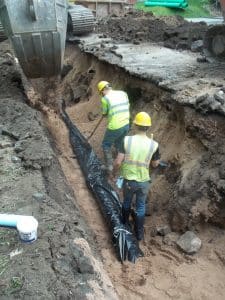
Houghton has an asset management system for its water and sewer utilities which helps the city identify where its oldest infrastructure is located so they can replace and upgrade service and increase reliability, Waara explains.
“Old mains tend to break at the most inopportune times,” he says. “We have had some issues with the old mains over the years, and now we have the chance to replace them affordably.
“We’re very happy to have received this grant as it will allow the city to get a lot of work done for about 25 percent of what it would have cost if we had to pay for all of the work out of our own coffers,” he adds.
The $1.5 million grant will cover 75 percent of the $2 million project.
City of Ironwood
Ironwood is planning to replace an existing two-inch galvanized water main that serves roughly 20 homes. It’s a dead-end line that is beyond its useful life, says Paul Anderson, city manager and city engineer.
“It has a lot of holes in it, a lot of leaks every winter,” he explains. “I think this last winter, we put maybe five or six patches on it in order to keep it from leaking. We’d patch it in one spot, and it would start leaking five feet away.”
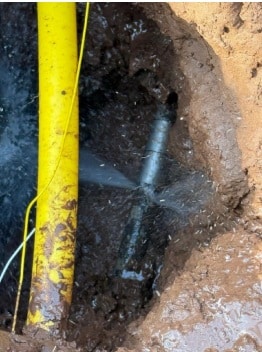
The line needs to be upgraded to a new six-inch ductile iron pipe, Anderson says. The city will use the $672,540 grant plus their local share of $236,298 to replace approximately 2,000 feet of water main.
The work is scheduled for next May through July.
“We’re super excited, super appreciative of this funding,” the city manager and engineer adds. “As soon as we heard about it and the types of projects they were looking for, we said, ‘We’ve got just the project for that.’”
“This project was in our capital improvement plan as needing to be replaced,” he goes on to say. “It seemed like a great fit, so we jumped right on it as soon as we heard about the funding opportunity being available.”
Community Development Block Grants
The three U.P. grants are among 12 totaling $21.5 million that the MSF announced in September.
Community Development Block Grants are federal grants to local governments for a wide range of community development projects. Their primary goal is to develop viable urban communities. They target low to moderate-income communities.
Seventy percent of block grants are distributed directly by the U.S. Department of Housing and Urban Development. The remaining 30 percent of the funds are distributed to states, which then award them to small cities, towns, villages and rural counties through a competitive application process.
In Michigan, they are awarded by the Michigan Strategic Fund (MSF) and administered by the Michigan Economic Development Corporation (MEDC).
The MSF is the state’s primary economic development fund, responsible for receiving and managing tax dollars for development and authorizing programs. The Michigan Economic Development Corporation (MEDC) executes and implements programs using those funds. The MSF board approves funding for projects, while the MEDC handles the day-to-day management and program administration and provides resources for economic development initiatives across the state.
In collaboration with more than 100 economic development partners, the MEDC markets Michigan as the place to do business, assists businesses in their growth strategies and fosters the growth of vibrant communities across the state.
“The Community Development Block Grant Water-related Infrastructure grants are an integral part of placemaking support for our communities that ensures their infrastructure needs can be met, so the people and businesses who call it home will continue to do so with confidence and pride,” said Dave Meninga, senior vice president of community development programs and execution at the MEDC. “These projects, including in Upper Peninsula communities, help sustain quality of life for residents and businesses, both current and prospective. We are pleased to support their endeavors and hopeful these grants can contribute to greater prosperity and success for all in Michigan.”
Related Articles
Eastern U.P. colleges create a new pathway for early childhood educators
Lake Superior State University and Bay Mills Community College are stepping in to address a critical need for highly qualified educators in the region and beyond.
Visit Keweenaw and Keweenaw Chamber share new space
The organizations are sharing office space in the historic Leopold Building in downtown Houghton.

The Other Side of the Storm
A father and son struggled to survive in Lake Superior at the same time the Edmund Fitzgerald faltered and sank.