
How Community Health Workers are bridging the rural healthcare gap
Since July 2023, the NMU Center for Rural Health has certified 152 community health workers to connect underserved Upper Peninsula residents with vital medical and social resources. Funded by the Michigan Rural Health Transformation project, this initiative integrates workers into 30 regional organizations to strengthen the area’s healthcare infrastructure.

Editor’s note: This story was made possible by support from the Superior Health Foundation..
Kaiser Permanente, one of the nation’s largest healthcare providers, calls Community Health Workers “the hidden heroes of our complex health system.” These public health professionals provide a critical link to care, connecting underserved or marginalized populations to vital health systems, insurance coverage, and social services.
For a wide variety of reasons—including limited income, lack of education, lack of transportation, distance from health care services, housing or food insecurity, and systemic barriers—many people struggle to access preventive healthcare or essential social resources. Community Health Workers step into that gap, serving as a lifeline to a healthier, more stable life.
Increasingly, these dedicated workers are making a profound impact in the Upper Peninsula, thanks to a program established and run by the Northern Michigan University (NMU) Center for Rural Health. The real-world impact of this initiative is best seen through the individual lives it changes.
Consider an elderly resident who lived alone, isolated by a lack of transportation and failing vision that made using the phone and communicating a massive hurdle. Because of these barriers, his critical dental and vision needs went completely unmet.

Everything changed when Denise Usher, a Community Health Worker at the Sawyer Upper Great Lakes Family Health Center in Gwinn, stepped in to help him navigate the system. Usher immediately scheduled an appointment for him with the center’s dental department and began untangling his transportation challenges.
“I spent a significant amount of time coordinating calls between the patient and a volunteer driver to help him get to his dental appointments,” Usher says. “We were able to get him to several appointments, and he is now working on getting care for his vision.”
Usher sums up her role simply: “In a nutshell, I connect patients with the resources they need.”
But her impact goes far deeper, according to Molly Holmstrom-Bolster, director of value-based care and quality for Upper Great Lakes Family Health Center. Holmstrom-Bolster, who oversees Usher and the center’s team of Community Health Workers, says Usher’s hands-on approach is what sets her apart.
“Rather than simply handing over information, she takes the time to help patients navigate services and follow through with support,” Holmstrom-Bolster explains. “I’ve seen patients become much more engaged in their healthcare because Denise helped them overcome barriers that felt completely overwhelming on their own.”
Sarah Tregembo, practice manager at the Upper Great Lakes Family Health Center in Sawyer-Gwinn, notes that this high level of engagement is rooted entirely in trust.
“Community Health Workers become a familiar, approachable face within the clinic,” Tregembo says. “That trust encourages patients to share deep-seated challenges they might otherwise keep to themselves, allowing the care team to truly understand their needs, develop personalized goals, and deliver more successful health outcomes.”
Community Health Worker Training
The NMU Center for Rural Health has made significant strides since July 2023, certifying 152 Community Health Workers across the U.P. These individuals are now integrated into approximately 30 regional entities, ranging from local health departments and hospitals to senior centers and homeless shelters.

Elise Bur, director of the NMU center, highlights how this training has bolstered the regional workforce while bridging gaps in rural healthcare access. This success is built on collaboration with the Michigan State University’s Michigan Center for Rural Health, the U.P. Workforce Innovation Network, a federally funded project to increase access to healthcare for U.P. residents, and Everyday Life Consulting, the owners of the community health worker curriculum.
Shannon Lijewski, principal and CEO at Everyday Life Consulting in lower Michigan, is a champion for supporting the expansion of community health workers statewide, particularly in rural areas.
“Increasing the number of community health workers is hands down one of the most critical ways to improve health in rural areas,” Lijewski says.
The reach of this initiative goes beyond direct patient care, earning the center the 2025 Nonprofit of the Year award from the Upper Peninsula Economic Development Alliance, a network that supports businesses and entrepreneurial growth throughout the U.P. This honor reflects the center’s role in securing over $2.3 million for healthcare and workforce projects. Furthermore, a partnership with local stakeholders provided $80,000 in tuition aid for EMS students in the western U.P.
For individuals like Denise Usher, the path to state certification is rigorous, requiring a 140-hour commitment over six weeks of intensive study. The most recent training cycle wrapped up on July 9, yet Bur notes that momentum is building. More sessions are planned over the next year and a half to further strengthen the healthcare infrastructure of the region.
A majority of participants are already active in the health or social service fields. Usher, for instance, transitioned into this role with a professional history that includes time at a public health department and experience in medical transcription.
Who’s Using Community Health Workers
A diverse network of regional organizations now employs these Community Health Workers, including UP Health System-Marquette, UP Health System-Portage, the Luce-Mackinac-Alger-Schoolcraft District Health Department, the Superior Alliance for Independent Living in Marquette, the Ishpeming Senior Center, and Room at the Inn, a Marquette-based shelter.
“Community Health Workers make a difference because they are the heart of our communities,” says Leann Espinoza, maternal infant health program manager for the Luce-Mackinac-Alger-Schoolcraft health district. “As trusted members of the populations they serve, they understand local needs, know the available resources, and help individuals and families navigate systems that can otherwise feel completely overwhelming.”
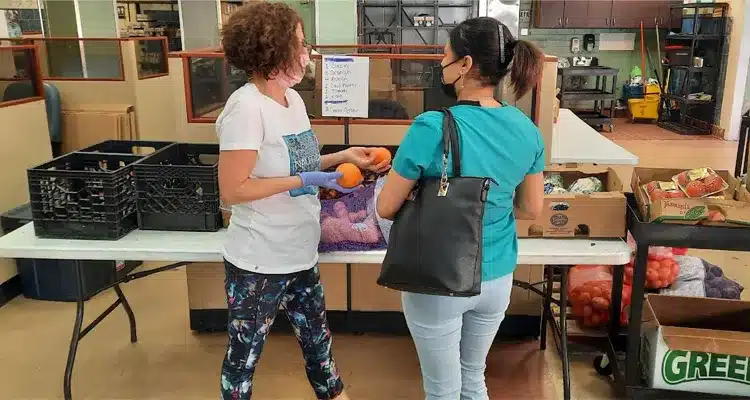
The power of that navigation is evident in the work of Kathryn Matson, a community health worker with the Luce-Mackinac-Alger-Schoolcraft district, who recently assisted a young mother with two children and a third on the way.
“During one of our conversations, I learned that the car seats she was using were expired and unsafe,” Matson recalls. “I reached out to a child passenger safety technician through the Michigan Department of Health and Human Services to see what resources were available.”
With her client’s permission, Matson coordinated the connection to get the mother answers and gear.
“She received new car seats at no cost, along with education and hands-on training to ensure they were installed correctly and used safely,” Matson says. “The outcome was that her children had safe, properly installed car seats, and she felt more confident knowing they were protected. It was rewarding to help connect her with a resource that made a meaningful difference for her family’s safety.”
Where the Funding Comes From
The need for more Community Health Workers is great in every rural area of Michigan, but a lack of funding has historically prevented many communities from developing and sustaining them.
NMU’s Community Health Worker training program initially launched in 2022 with a $1.43 million grant from the federal Health Resources and Services Administration. While that specific funding concluded last March, the Center for Rural Health managed its budget efficiently enough to sustain the program independently, according to Bur.

Moving forward, the initiative will be anchored by the Michigan Rural Health Transformation project, a federally funded program that has contracted with NMU to operate the community health worker curriculum across the Upper Peninsula.
Administered by the Michigan Department of Health and Human Services, the statewide transformation project leverages $173 million in federal funds for a multi-year effort to fortify the rural healthcare network, expand patient access, and support long-term sustainability for rural providers.
Yet, despite this influx of regional support, Molly Holmstrom-Bolster worries that broader financial structures for Community Health Workers haven’t kept pace with the industry’s shift toward preventative, whole-person care.
“Many (Communith Health Worker) programs continue to rely on short-term grants, making it difficult to recruit, retain, and sustain this essential workforce,” Holmstrom-Bolster says. “Long-term, sustainable funding and reimbursement models are vital to fully integrate (Community Health Workers) into public health systems. Investing in this workforce is not only an investment in individual health—it is an investment in stronger families, healthier communities, and a more efficient healthcare system.”
Related Articles
From hospital to homelessness: Marquette project seeks to establish recuperative care for the unhoused
People experiencing homelessness are often discharged to shelters or the streets with no way to receive crucial recuperative care. A project led by Room at the Inn in Marquette aims to change that.