The outsized economic impact of Higher Education in the U.P.
The study demonstrates the profound impact Michigan’s public universities have on the state and all of its communities in economic activity, job creation and tax revenues generated.

The U.P.’s public universities are the training ground for the next generation of thinkers, planners, doers.
But they’re more than that. They are an important economic engine that drives the U.P. economy forward.
And according to a study recently released by the Michigan Association of State Universities (MASU), the U.P.’s three public universities and others across Michigan are doing a magnificent job of it.
The study, conducted by the Anderson Economic Group for MASU, found that the state’s 15 public universities generated nearly $45 billion in net new economic activity in 2024. That was almost 28 times the state’s $1.6 billion appropriation for those institutions.
“The economic impact of these universities is significant, and our work with Michigan universities since 2007 indicates that they are an important driver of the economy in Michigan,” says Tyler Theile, vice president and director of public policy at Anderson Economic Group.
In the U.P., Northern Michigan University, Michigan Technological University and Lake Superior State University are among the “strongest tools we have for long-term prosperity,” says Marty Fittante, who is CEO of InvestUP, a regional economic development organization.

In a rural region like the U.P., higher education institutions have an outsized economic impact, directly, through jobs, high-wage employment, and student, visitor and institutional spending, and indirectly, through critical contributions to population, community vitality, innovation, research, workforce development and readiness, Fittante points out.
“The U.P.’s network of strong, diverse colleges is a distinctive competitive advantage that sets the region apart from other rural areas across the country,” he says.
According to the MASU study, Michigan’s state universities support more than 127,000 jobs statewide. They employ more than 26,000 faculty and 68,000 staff, the majority of whom live and work in the communities surrounding their campuses, contributing to those local economies.
The economic impact also comes from alumni who live and work in Michigan. The study says the state’s 1.6 million living public university alumni generated more than $15 billion in incremental earnings due to having earned a degree from a Michigan public university.
University-related economic activity produced more than $7.1 billion in state tax revenue, including personal income tax, sales and use tax, and transportation taxes paid by employees, students and alumni living in Michigan.
The study also found that Michigan public university graduates earn nearly twice as much as peers without a college degree, with average earnings of $91,073 for individuals ages 25-34, compared to $46,272 for high school graduates.
“These findings make clear that Michigan’s public universities are not just educating students — they are fueling the state’s economy, strengthening communities and positioning Michigan to compete nationally and globally,” said Rick Koubek, president of Michigan Technological University and chair of the MASU board. “Whatever the need, Michigan has a public university to meet the challenge.”
The three public universities in the U.P. contributed significantly to the overall return on investment.
Michigan Technological University
Michigan Tech generated more than $972 million in total economic impact during fiscal year 2024. Its research expenditures totaled $103.8 million, rising to $106.9 million in FY2025.
The university employs more than 4,200 people, whose spending supports the economy, both locally and more broadly.

MTU has 26,000 alumni living in Michigan. Their economic contribution includes high salaries in STEM fields. Graduates are ranked in the top 20 nationally for early-career salaries, with a median of $82,400.
Altogether, Michigan Tech generates 10 times the state funding it receives.
“This report underscores a simple truth: Investing in Michigan’s public universities isn’t just good education policy — it’s smart economic policy,” says MTU President Koubek
Northern Michigan University
In its submission to the economic impact study, NMU said it has been an important economic driver in the Upper Peninsula, Michigan and beyond for more than 125 years. Today, with 7,000-plus students from 48 states and 40 countries, drawn to NMU for its 190 degree programs ranging from certifications to doctorates, the university offers an academic program for all of Michigan’s Hot 50 Jobs through 2032, as identified by the Michigan Center for Data and Analytics.
More than 49,000 NMU alumni live in Michigan, creating a $333 million economic impact in the state, the economic impact report submission noted, adding that university-generated visitors spend $6.3 million in the Marquette area annually, and community service activities performed by students and staff are valued at $21.3 million.
Invent@NMU, an entrepreneurial support program and idea incubator, generates new businesses. The university’s Innovation Institute also sparks economic growth by providing low-cost entrepreneurial services to the local community.

“As I’ve been learning more about Northern and what it offers students, employees and the general community, I’ve realized that the full extent of NMU’s impact on the Upper Peninsula and State of Michigan is significant, especially as it relates to workforce development and regional economic development,” says new NMU President Chris Olsen, who began his tenure in January. “There are several career fields in the U.P. that are made up almost exclusively of NMU graduates.”
Olsen adds: “We also know Northern is a draw for national and regional retail brands whose representatives have told NMU administrators that they chose to locate in Marquette because of our large number of students. NMU is one of the U.P.’s largest employers, and our campus is the site for much of the region’s arts, cultural and sports activities, all of which combine to support the Upper Peninsula’s economic vitality.”
Lake Superior State University
“The MASU study shows that the universities in this state are the economic and labor force engines that drive the economy of Michigan,” says LSSU President David Travis.
Lake Superior State University has conducted its own economic impact study, which the university plans to release shortly. Travis says the draft report indicates the significant impact that LSSU has on the surrounding region.
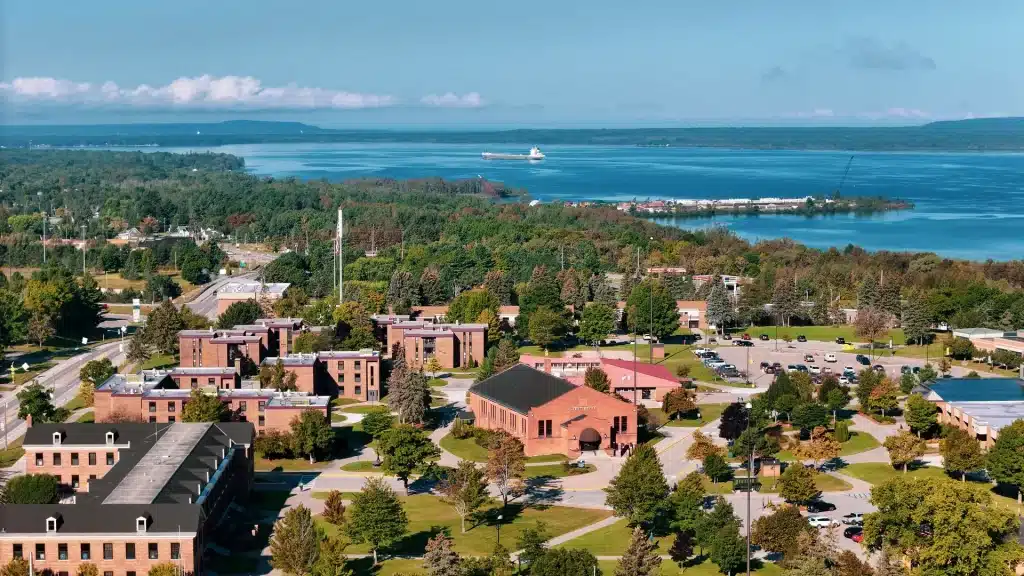
“Although LSSU is the smallest university in Michigan, the MASU study demonstrates that the university has a significant impact on the Eastern Upper Peninsula region of Michigan,” he says. “Not only is LSSU the primary source of trained professionals for this part of the state in areas such as engineering, nursing and emergency responders, it also serves as the engine that drives local innovation and economic development.”
The MASU report highlights LSSU’s Center for Freshwater Research and Education, which it says turns hands-on freshwater science into economic and ecological benefits that ripple across the entire Great Lakes region. The center’s externally funded research brings millions of dollars in state, federal and international funding into the U.P., the MASU study says.
“The results of this study demonstrate that the investment the state puts forward to support its public universities is a worthwhile one with a significant return on that investment,” says President Travis. “Although LSSU receives the smallest allocation from the state, the return on investment is one of the largest in the state.”
MASU CEO Dan Hurley says the association’s study demonstrates the profound impact Michigan’s public universities have on the state and all of its communities in economic activity, job creation and tax revenues generated.
“From Houghton to Marquette to the Soo, these institutions serve as engines of economic impact and mobility, positively affecting virtually every aspect of life in the Upper Peninsula,” he says.
Related Articles
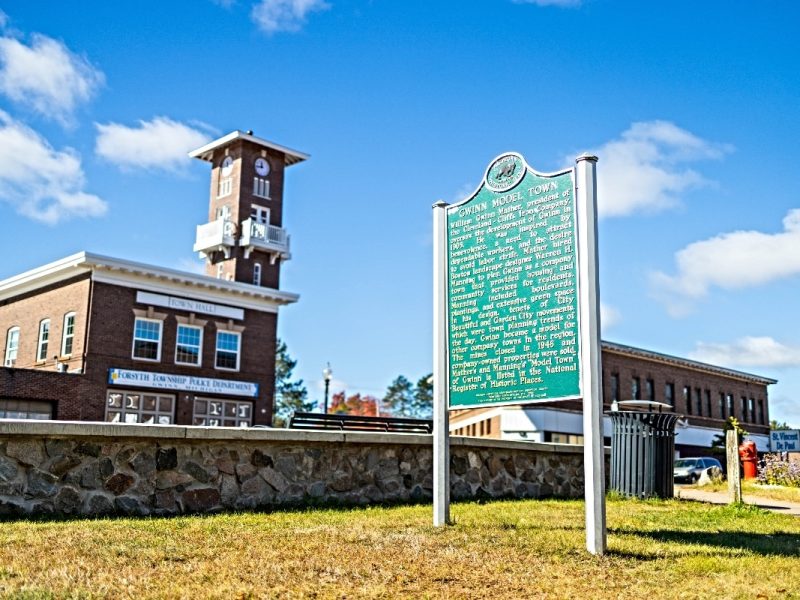
U.P. tour helps historical communities build a stronger economic future
Michigan Municipal League travels north to share resources for small business development.

From Forest to Pharmacy: Researchers explore maple sap as a lifeline for cancer survivors
Researchers in the U.P., Michigan and beyond are looking into potential health applications for maple sap.
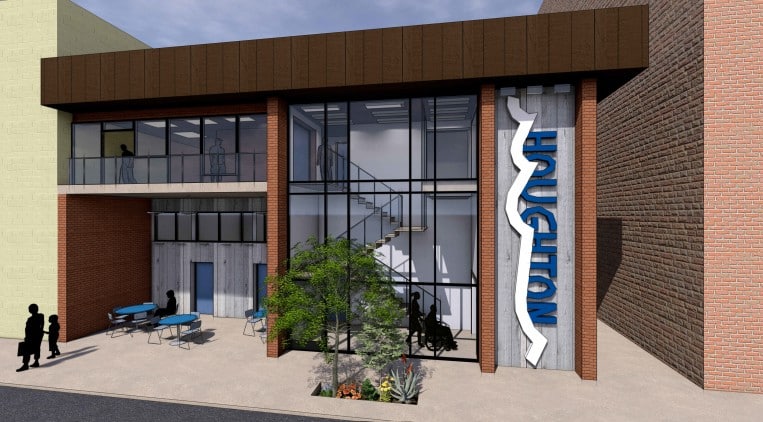
Houghton secures $3.8M to transform downtown into talent hub
The new projects are part of an ongoing effort to turn Houghton’s downtown and waterfront into a talent-driven destination the city is calling North Landing.