
Beautifying the World One Skein at a Time: The microscopic magic of UP North Yarns
Monica Thoune, a 72-year-old former teacher, combines her background in science education and economic development to run UP North Yarns, a successful hand-dyed yarn business in the Upper Peninsula
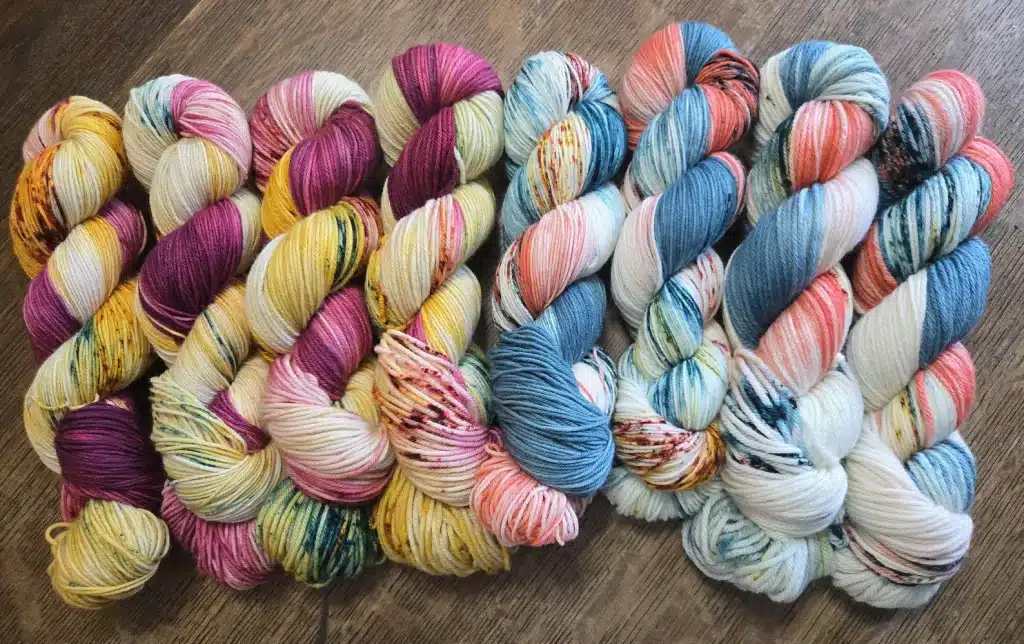
The word “magic” is bandied about quite often these days, but what Monica Thoune is able to do with both wool and cotton yarns is truly magical.
From the outskirts of Powers—a small town of just 381 residents in Menominee County—Thoune operates as the one-woman powerhouse behind UP North Yarns, a business dedicated to “Beautifying the World One Skein at a Time.” Working out of her family homestead amid winding country roads and quiet farmsteads, Thoune spends her days hand-dyeing yarn, filling orders, and tracking shipments.
It is a full-time occupation that perfectly blends her past and her present. Thoune, 72, holds a bachelor’s degree in science education from Ferris State University and a master’s degree in economic development from Michigan State University. As it turns out, both degrees have proven invaluable to her business’s success.
The Chemistry at the Microscopic Level
Yarn dyeing at UP North Yarns is far more complicated than simply buying a package of commercial dye and soaking skeins in a tub.
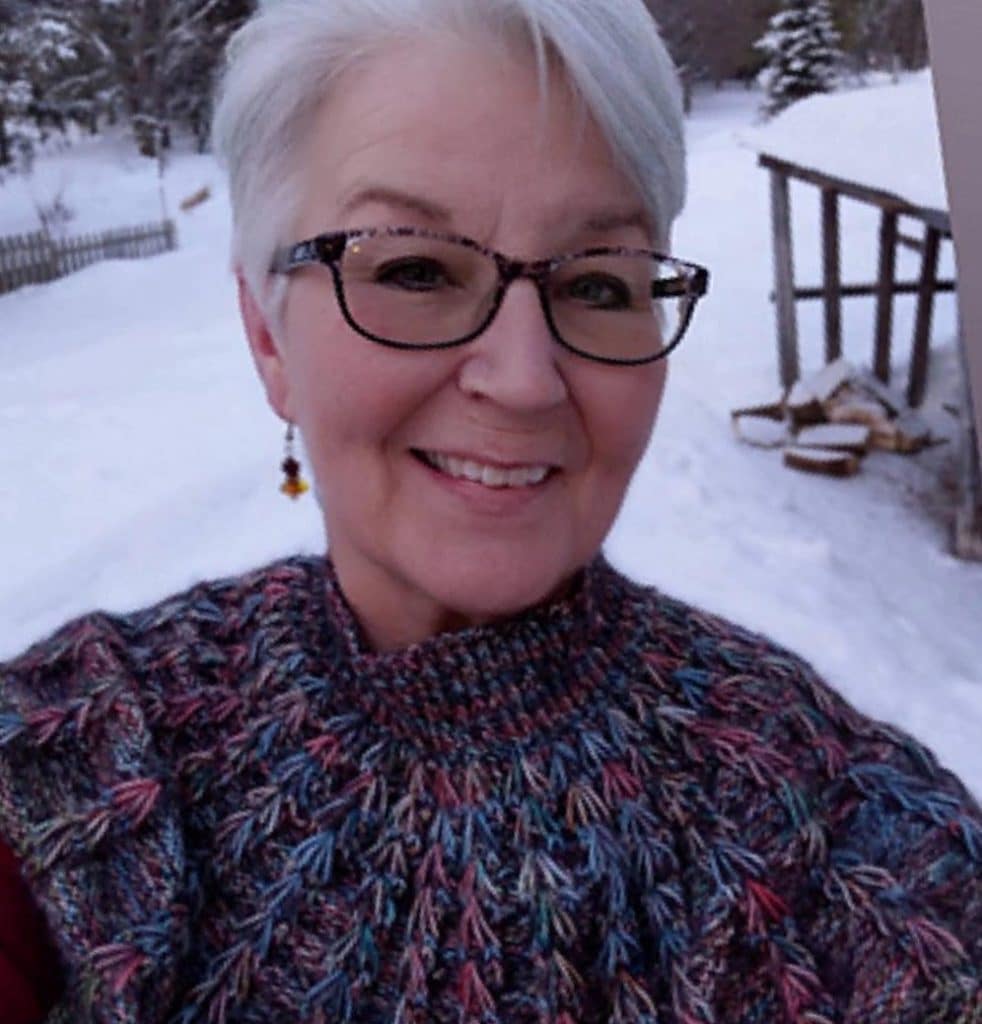
“Dyeing with either commercial or foraged plant dyes is all about chemistry at the microscopic level,” Thoune explains. “My knowledge of ionic and covalent bonds helps me understand how to prepare the yarn and what temperatures to use. There is nothing more chemistry-related in yarn dyeing than knowing the specific pH needed for the fiber. Wool needs an acidic pH of 2 to 4 and a temperature of 190°F to form strong covalent bonds; cotton needs an alkaline pH of 10 and can be dyed at room temperature. The correct pH is essential in getting those pigments to attach. This is a science, not something I learned overnight.”
That scientific foundation keeps her from making common amateur mistakes.
“There are many plant materials that people use to dye—or actually, just stain—yarn. Some of these dyes are what we call ‘fugitive,’ meaning they are not colorfast or lightfast. The colors will quickly fade when washed or exposed to sunlight,” she says. “I cringe when I see somebody post about dyeing with beets, grapes, or berries. They contain anthocyanin pigments, which have very low stability. A pretty purple will quickly fade to a drab brown.”
To achieve lasting, brilliant color with natural pigments, Thoune uses a meticulous pre-treatment process. “I pre-treat the yarn skeins with an aluminum mordant, simmering them for about an hour before letting them cool overnight. If I’m planning a large batch of natural dyeing, I’ll mordant a few kilos of yarn at a time—ten skeins equal one kilo—and hang them to dry. I can store them indefinitely and grab them whenever fresh plant material becomes available.”
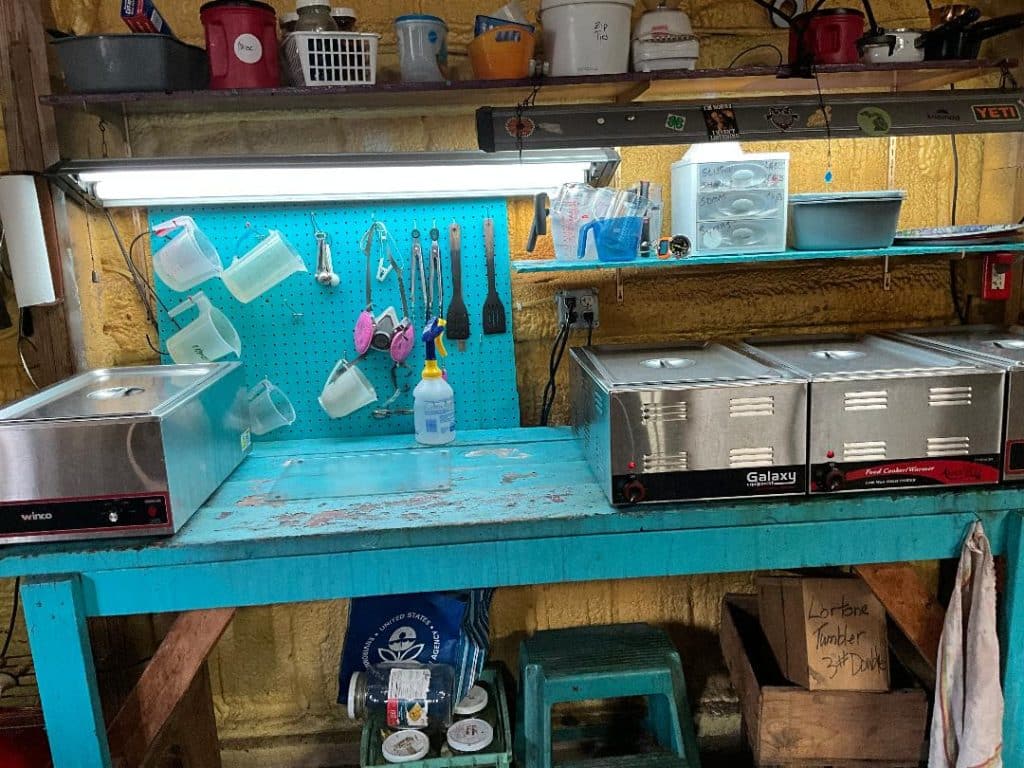
Safety is also paramount in her studio. “Even when I am not actively mixing or speckling dyes, I wear a high-quality respirator. Nitrile gloves go on my hands as soon as I enter the studio, and I always grab an apron—because dyes don’t care, and they will dye everything.”
Wearable Upper Peninsula Art
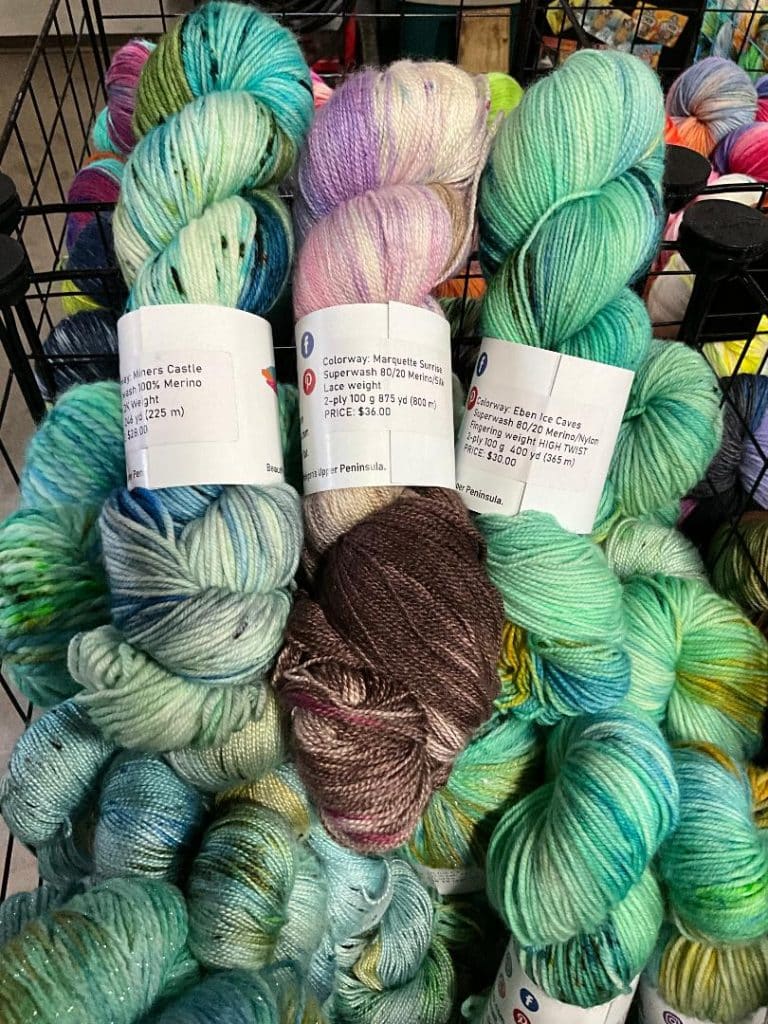
If the process sounds complicated, that’s because it is. But the resulting colors are as alluring as the U.P. landmarks that inspire them. Her collections include: Orehenge (browns and pinks mimicking the famous Marquette ore dock at sunrise), Drummond Island, Pictured Rocks, Eben Ice Caves, Big Springs (vibrant greens), and Agate Beach (rich earth tones).
These colorways are never accidental. For Orehenge, Thoune waited three years to find the perfect photo of the ore dock at sunrise. Once she did, she contacted photographer Jenifer Selwa for permission to feature the image alongside her yarn in advertisements. The match is seamless.
“When I look back at my first year or two of dyeing, I realize how far I’ve progressed,” Thoune reflects. “My colors are now more layered because I subject the yarn to several colors of dye, often in the same color family, which adds a lot of depth.”
Other collections follow popular regional themes. Sports fans flock to Go Green (for Michigan State University) and Wolverines (for the University of Michigan). Another highly sought-after collection is bird-themed, featuring colorways like Wood Duck, Pileated Woodpecker, Ruby-Throated Hummingbird, Black-Capped Chickadee, American Kestrel, American Robin, and even whimsical entries like Luna Moth.
Perfecting the Process
Achieving consistency requires rigorous record-keeping. Thoune logs the exact volume of water, weight of dye, and temperature ranges of every batch to track her successes and failures. During a tour of the large barn-garage that houses her operation, she shares the variables she must constantly balance, from seasonal shifts in foraging to the danger of denaturing.
“Plant matter must never be boiled,” she notes. “High heat destroys the pigment’s protein structure, turning what should have been a brilliant green, yellow, pink, or orange into a muddy brown.”
To maintain her inventory, Thoune keeps a heavy bag of black walnuts on hand, gathered from her own land the previous autumn. After drying the shells in her garage for several months, she simmers the husks for several hours. “I pick them green,” she says. “Some show mold, but that doesn’t matter—it actually helps the dyeing process. Once I strain the mixture, the result is a very aromatic, beautiful brown.”
In addition to black walnuts, her property provides a bounty of foraged ingredients like dandelions, Queen Anne’s lace, cosmos, and marigold blossoms. She is also expanding her botanical footprint: “This year I am growing two new-to-me plants: indigo for its gorgeous blues, and weld for its stunning yellows.”
When she isn’t foraging, Thoune sources raw wool from dedicated suppliers in Virginia, California, and Great Britain, and a wool/silk blend from China. However, she is actively working to bring her supply chain closer to home. At a recent North American Hill Sheep Show at the Escanaba fairgrounds, she connected with a Midwestern shepherd and a breeder from downstate Michigan as potential future suppliers.
From Side Gig to Community Staple
What started as a creative outlet as Thoune neared retirement from teaching has blossomed into a thriving full-time business. “I knew I needed something to keep my mind and hands busy,” she reflects. “Dyeing yarn hits all the brain things for me—science, beauty, and artistic expression.”
Stephanie Hasley Sarno, president of the Michigan League of Handweavers, stressed the importance of using high-quality indie products. “Weavers depend on hand-dyed fibers to bring dimension and originality to our designs, and they’re not always easy to find. Many of us seek them out at fiber fairs. Today, you can find and order online, but there’s nothing like meeting the artist and holding a hand-dyed skein to open up a world of possibilities.”
Social media has helped fuel UP North Yarns’ massive growth. Thoune boasts over 10,345 sales on Etsy, alongside 4,930 followers on Instagram and 7,300 followers on Facebook. She also posts regularly on Pinterest and Ravelry. This is where her master’s degree in economic development has proved invaluable.
“I think understanding basic economic principles has guided my business plan,” says Thoune. “I started small and only expanded when the business could pay for it. With the exception of about $500 in start-up funds, I have not used my own money to support the business. It needed to support itself. I also believe that understanding others’ economic capacities assisted me in keeping my selling prices on the lower end of the market. I understand that there are many who cannot buy a $30 skein of yarn. It is a luxury item and shouldn’t take precedence over milk and eggs.”
Though Thoune has lived in Big Rapids, Reed City, Lansing, and Grand Rapids over the years, she firmly claims the UP as her home—a home that happens to be full of passionate crafters.
“There are lots of knitters, crocheters, and weavers here,” Thoune says. “Also, because we’re a tourist destination, many travelers like to purchase a special skein or two of yarn from local artists.”
In fact, Thoune sells just as much yarn at local mainstays like the Falling Rock Café and Bookstore in Munising as she does at traditional yarn shops and the Marquette Farmers Market.
“Selling Monica’s yarns fits in perfectly with our support of artists and crafters in our retail sector,” Justin White, owner of Falling Rock, said. “Our customers and visitors are excited to see hand-dyed yarns by UP crafters.”
Thoune, who has received the Best of Fiber Award several times at the Bonifas Arts Center shows in Escanaba, has no plans of slowing down. “I plan on dyeing yarn with an online shop and participating in about 10 shows a year until I can’t do it anymore.”
Connect with UP North Yarns:
- Etsy: UPNorthYarns Shop
- Instagram: @upnorthyarns
- Facebook: UP North Yarns
Related Articles
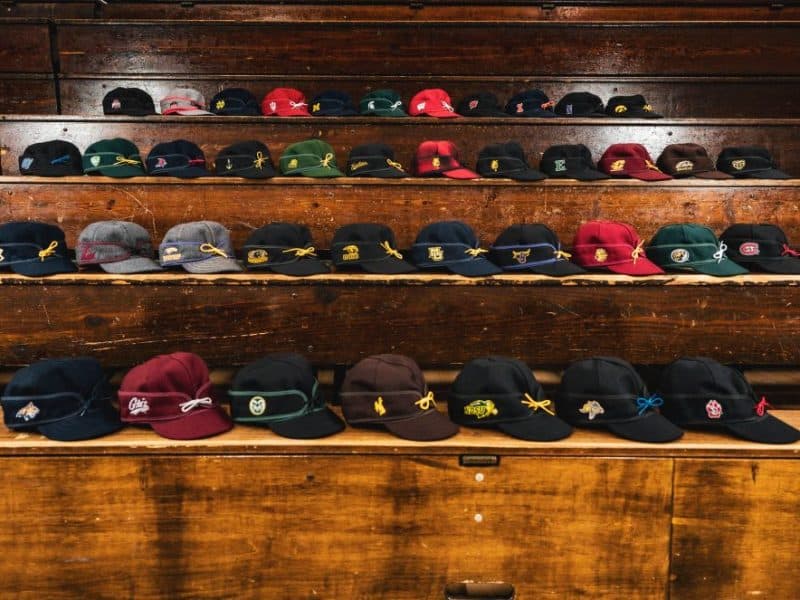
Stormy Kromer expands 2026 collegiate lineup to 38 universities across 12 states
Stormy Kromer has launched its expanded 2026 Collegiate Collection, growing to 38 universities across 12 states. Every piece in the collection is cut and sewn in Ironwood.
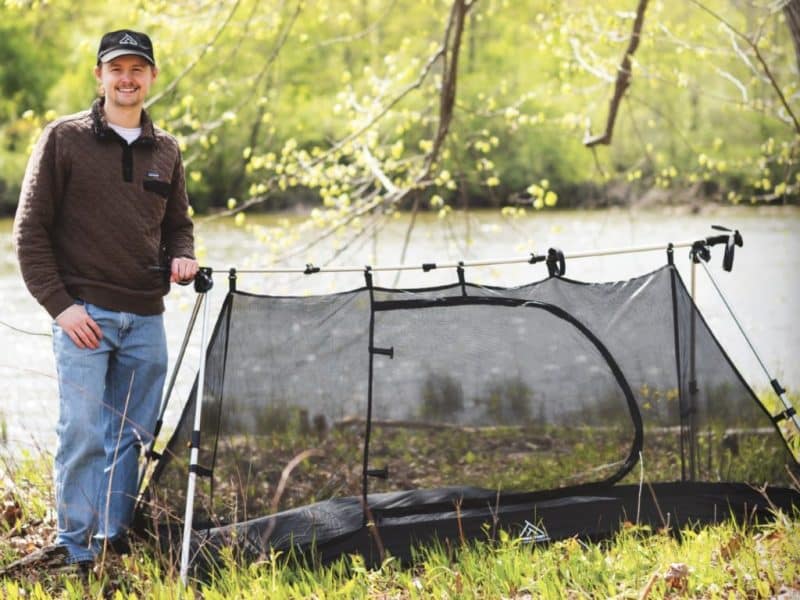
From Campus Project to Market Success: How one NMU student reimagined camping
How does a college project turn into a thriving outdoor brand? Discover how NMU student Evan BeVier and healthcare founder Gretchen Heinen scaled their big ideas with the help of Innovate Marquette SmartZone.
A tale of three cities: How small businesses foster U.P. local economies
Rich histories and tight-knit, hard-working communities drive the U.P.’s economic development.